A Trip to Parallel Worlds: The Backroads of La Axarquía - Travel reports by Béla Soltész
Unexpected sights in Andalusia: Béla Soltész's travel reports
Béla Soltész is a writer and social researcher living in Budapest, Hungary. In August 2022, he participated in Travel Factory Andalucía's trips and wrote about his experiences in a four-part travel report. Read about Nerja, Frigiliana, El Acebuchal, the Río Chillar gorge, Setenil de Las Bodegas, Ronda, Comares and the Karma Guen stupa through the eyes of a seasoned backpacker!
Chapter IV: A Trip to Parallel Worlds: The Backroads of La Axarquía
In Southern Andalusia, most visitors are attracted to the seaside, and they are right to do so. However, as we were craving for something unexpected, we decided to take a trip to La Axarquía. The region has many backroads that took us through some of Spain's most scenic hilltops, where we could see panoramic views of the countryside stretching out in all directions. After this short but wonderful road trip, I am sure that this area is a must-see for visitors of the region who are looking for something unexpected, something of an out-of-place feeling.
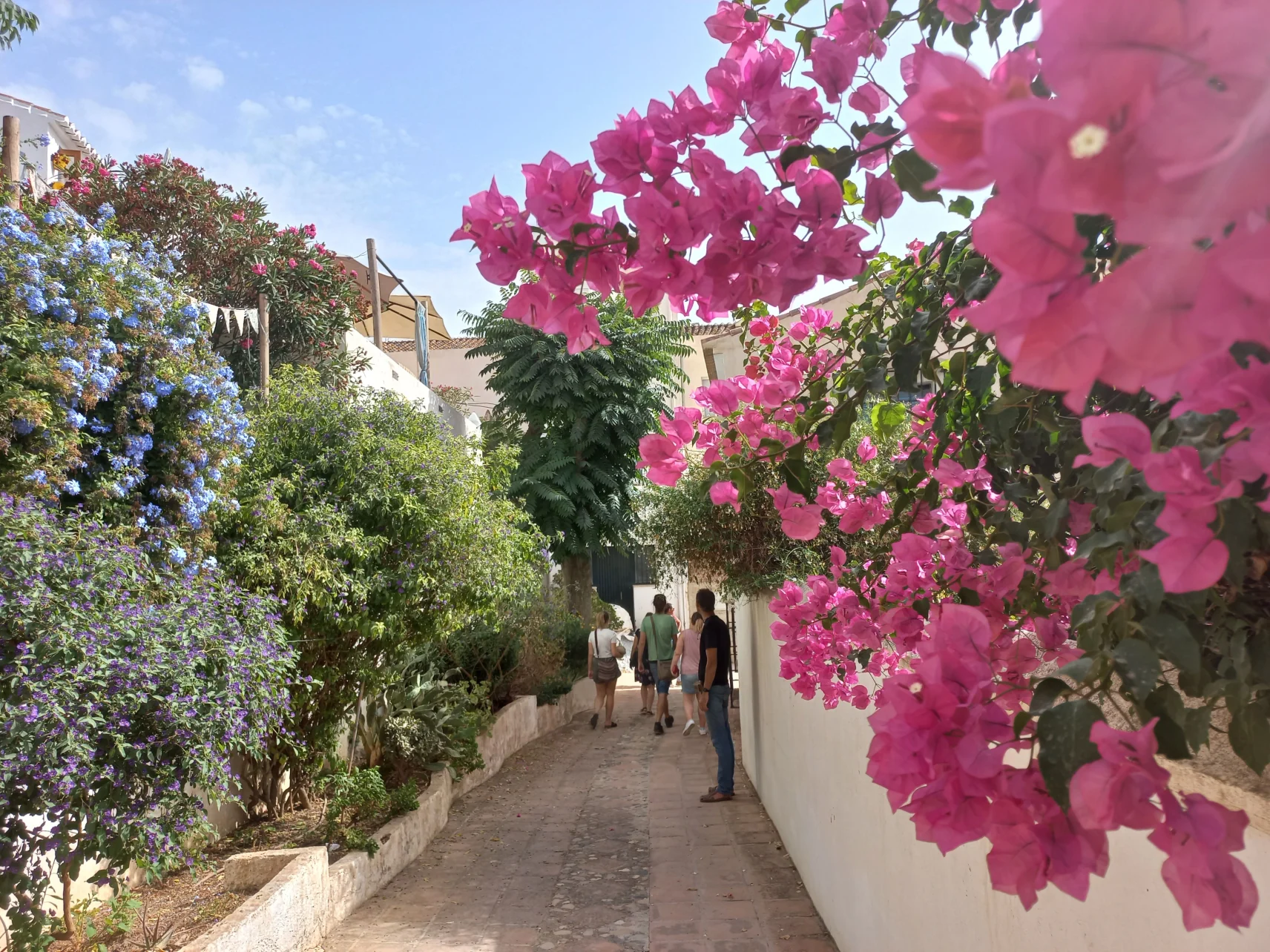
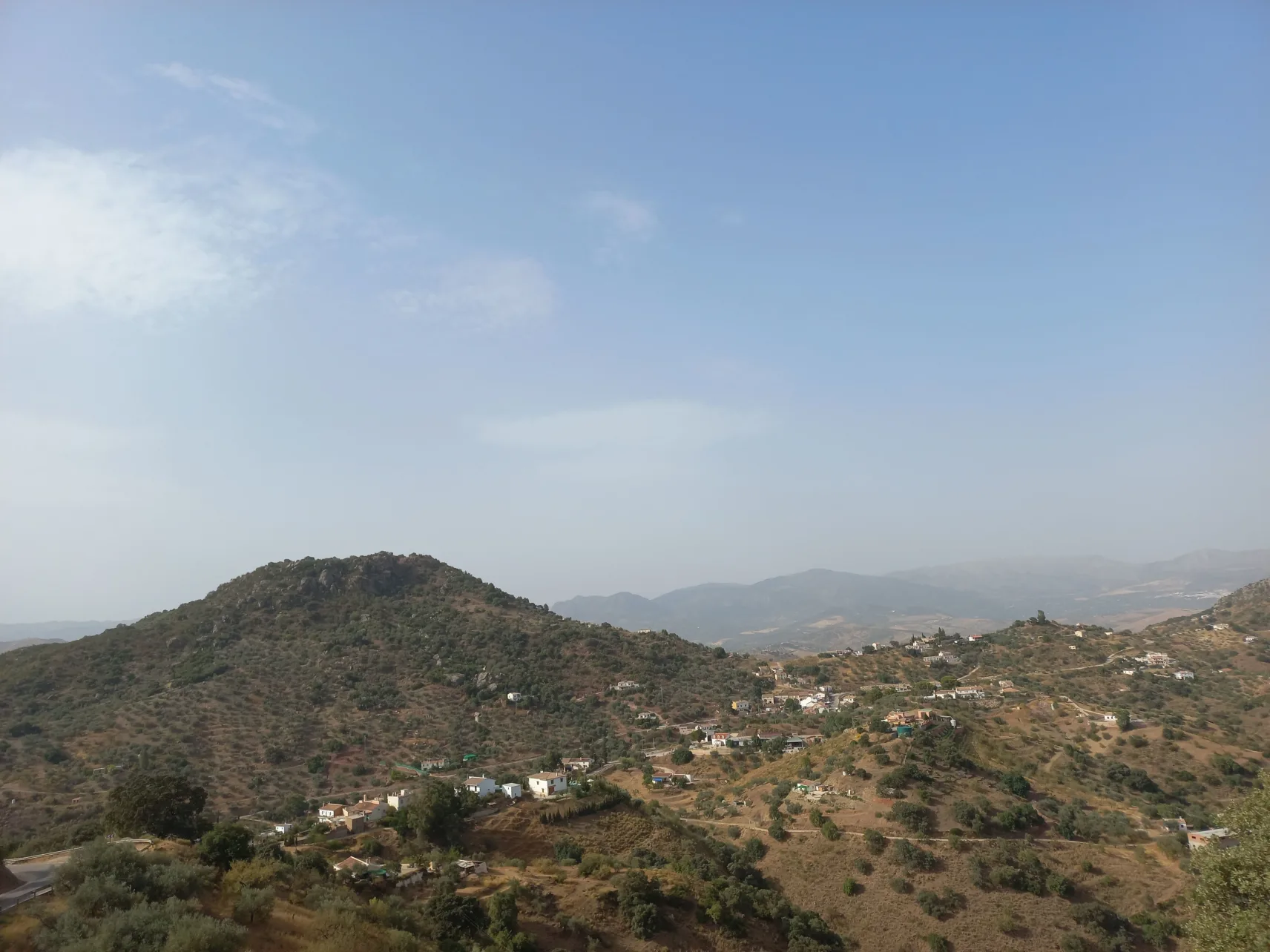
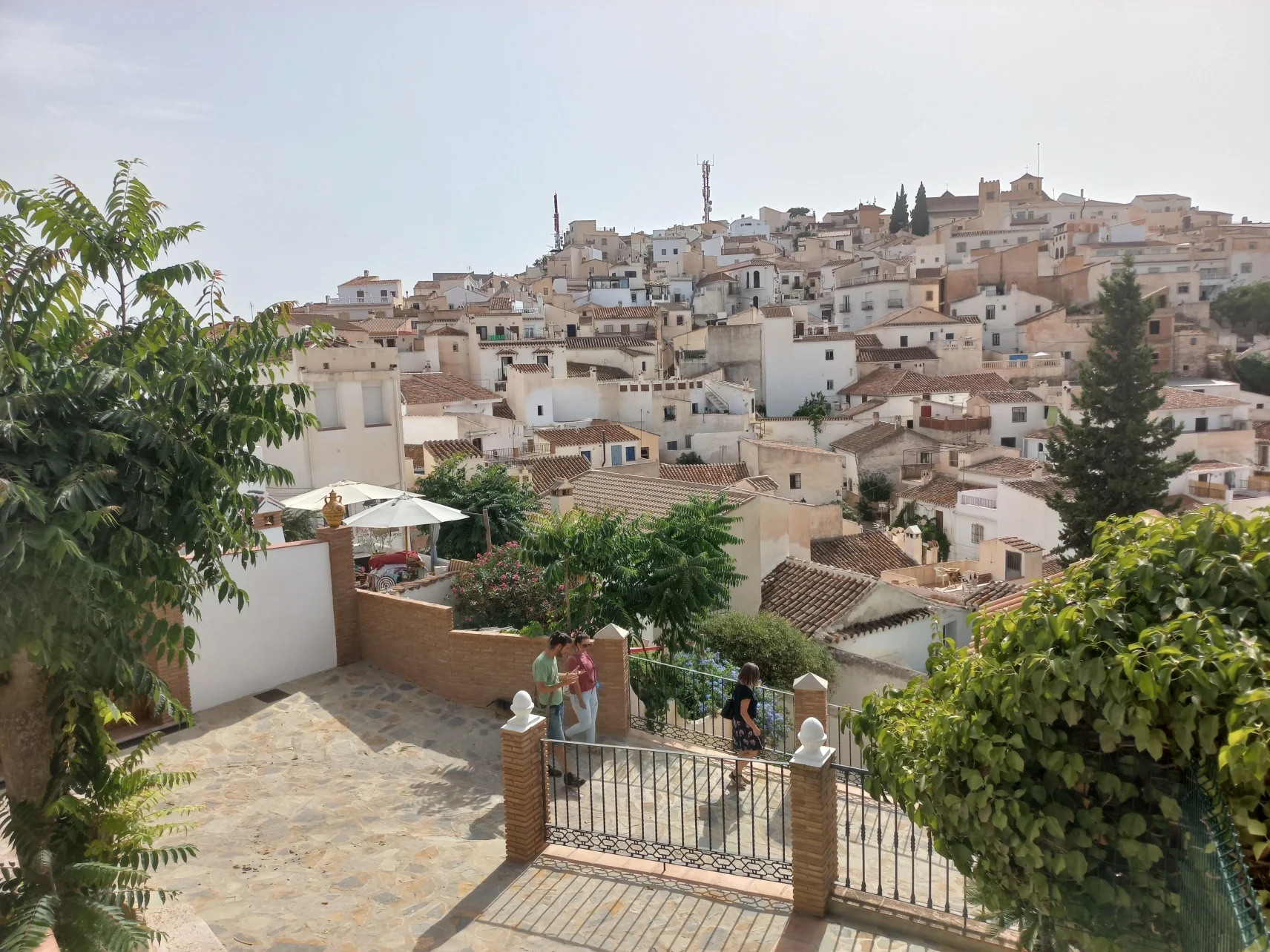
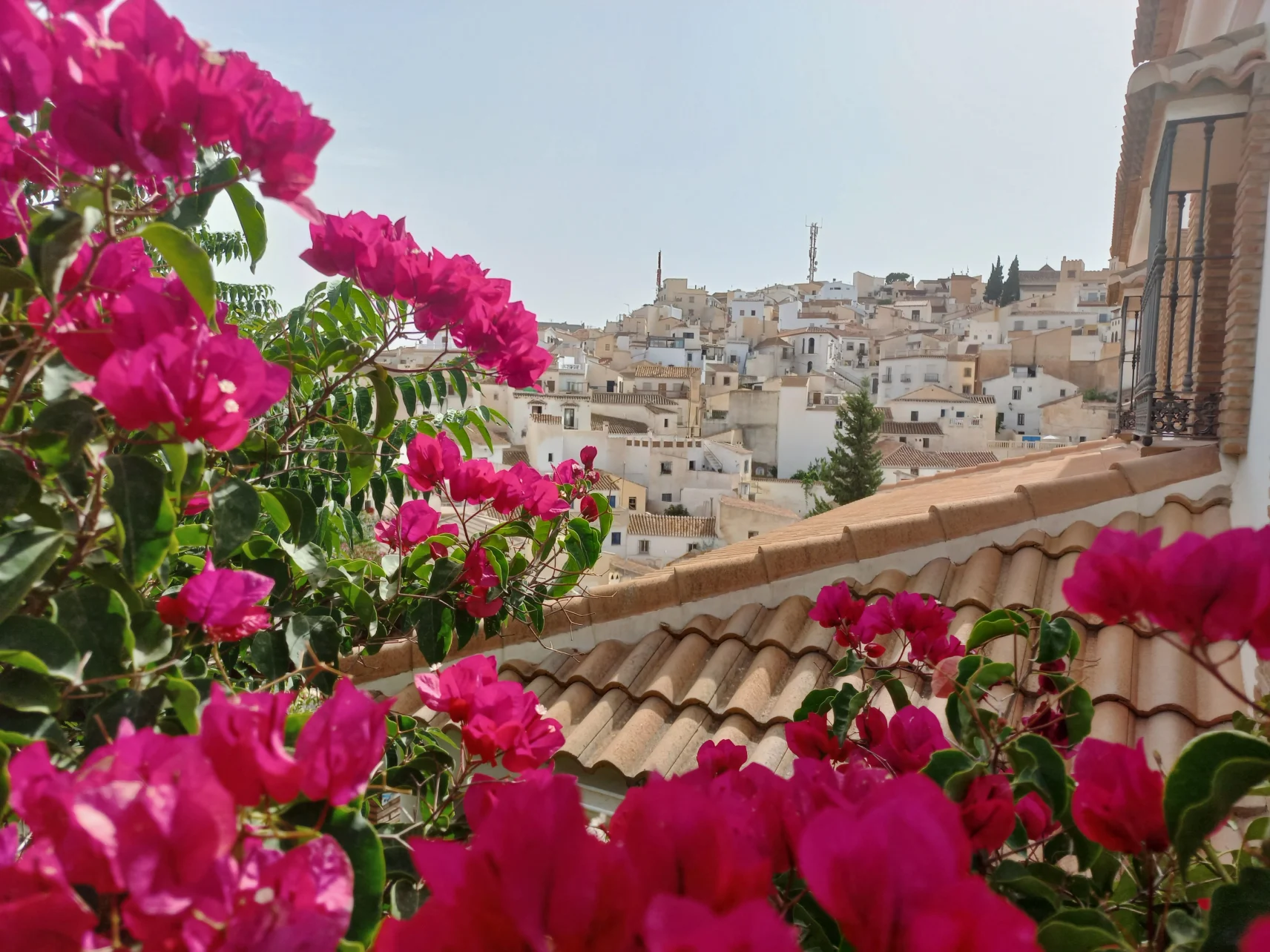
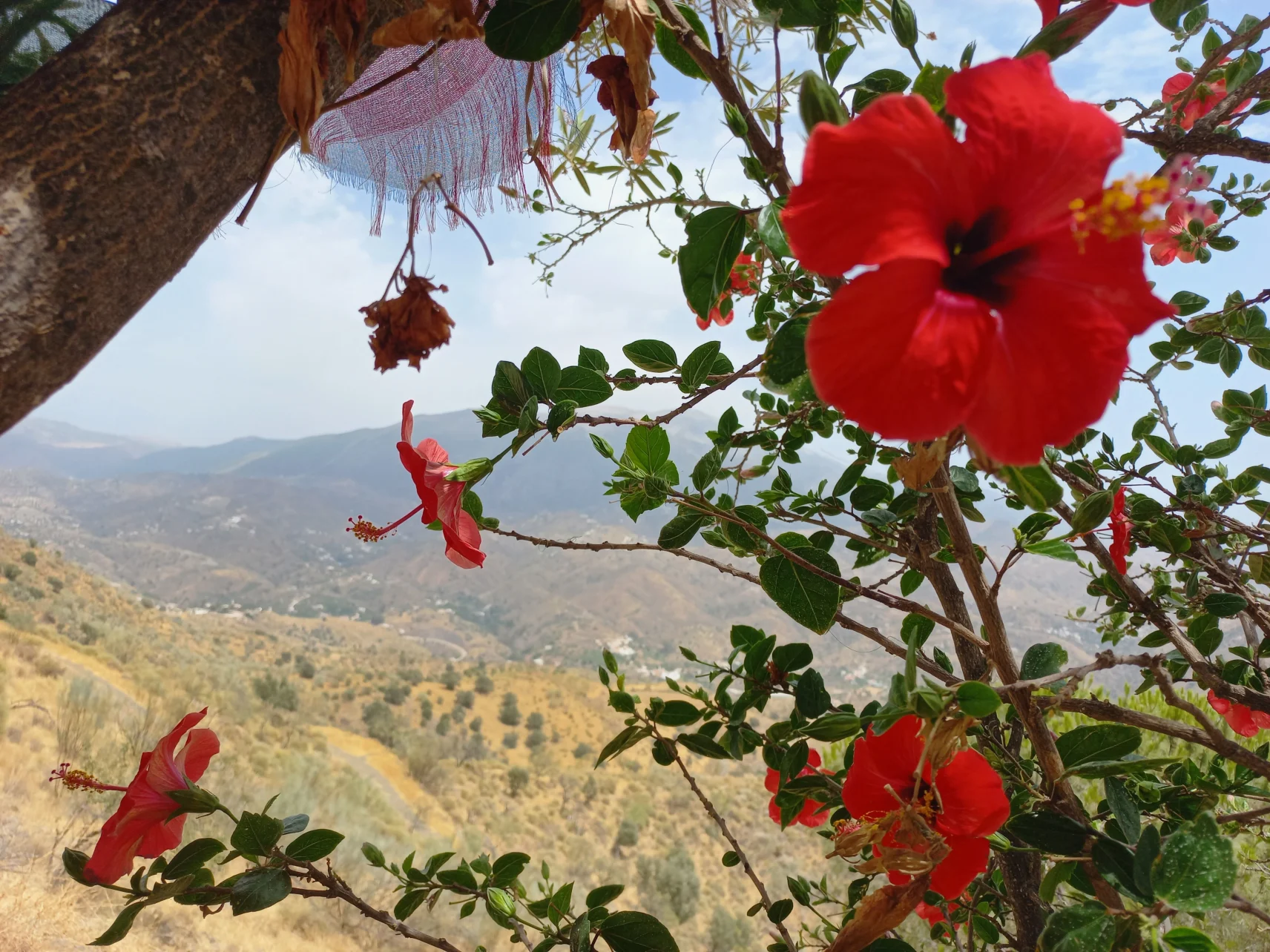
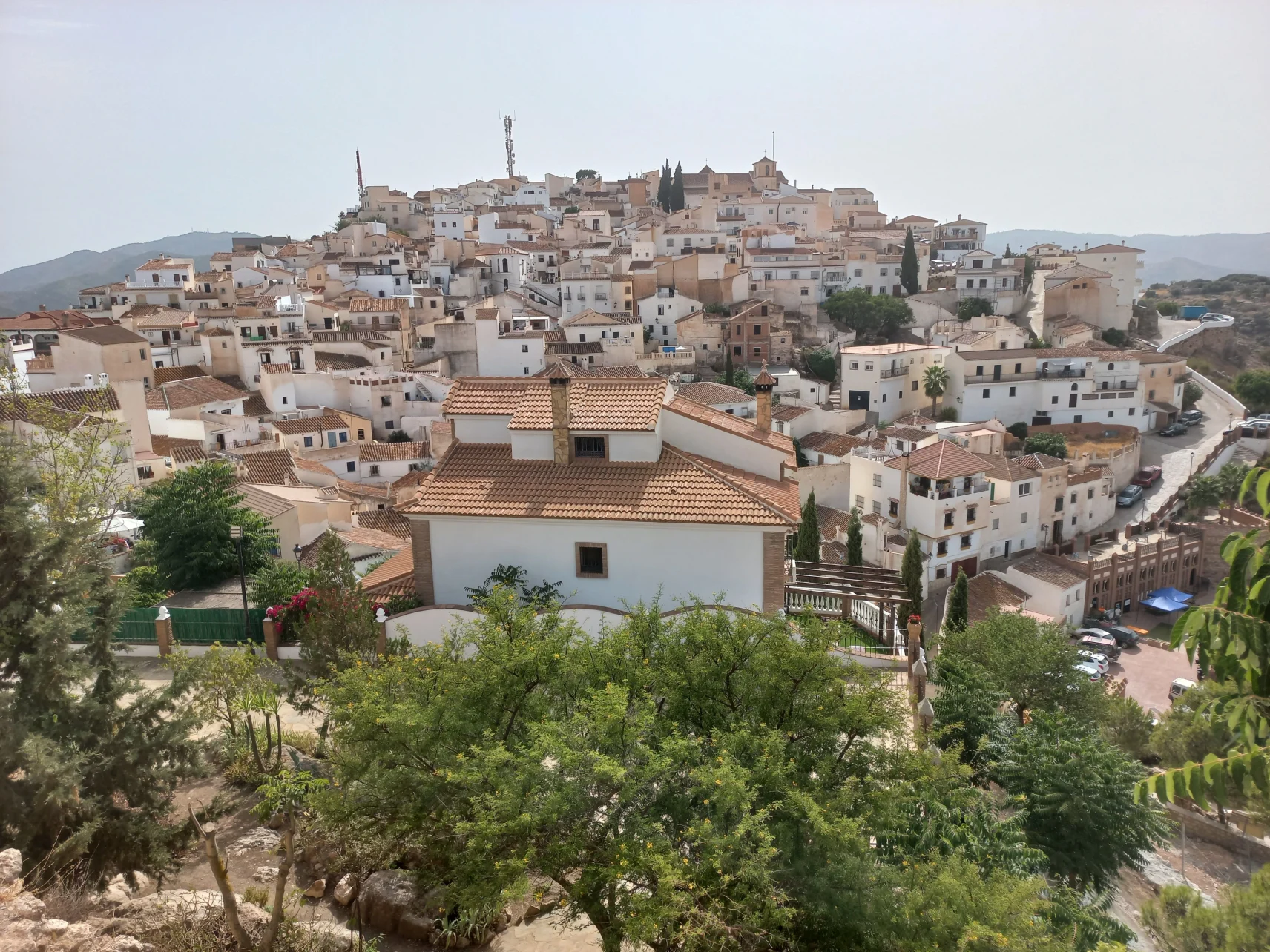
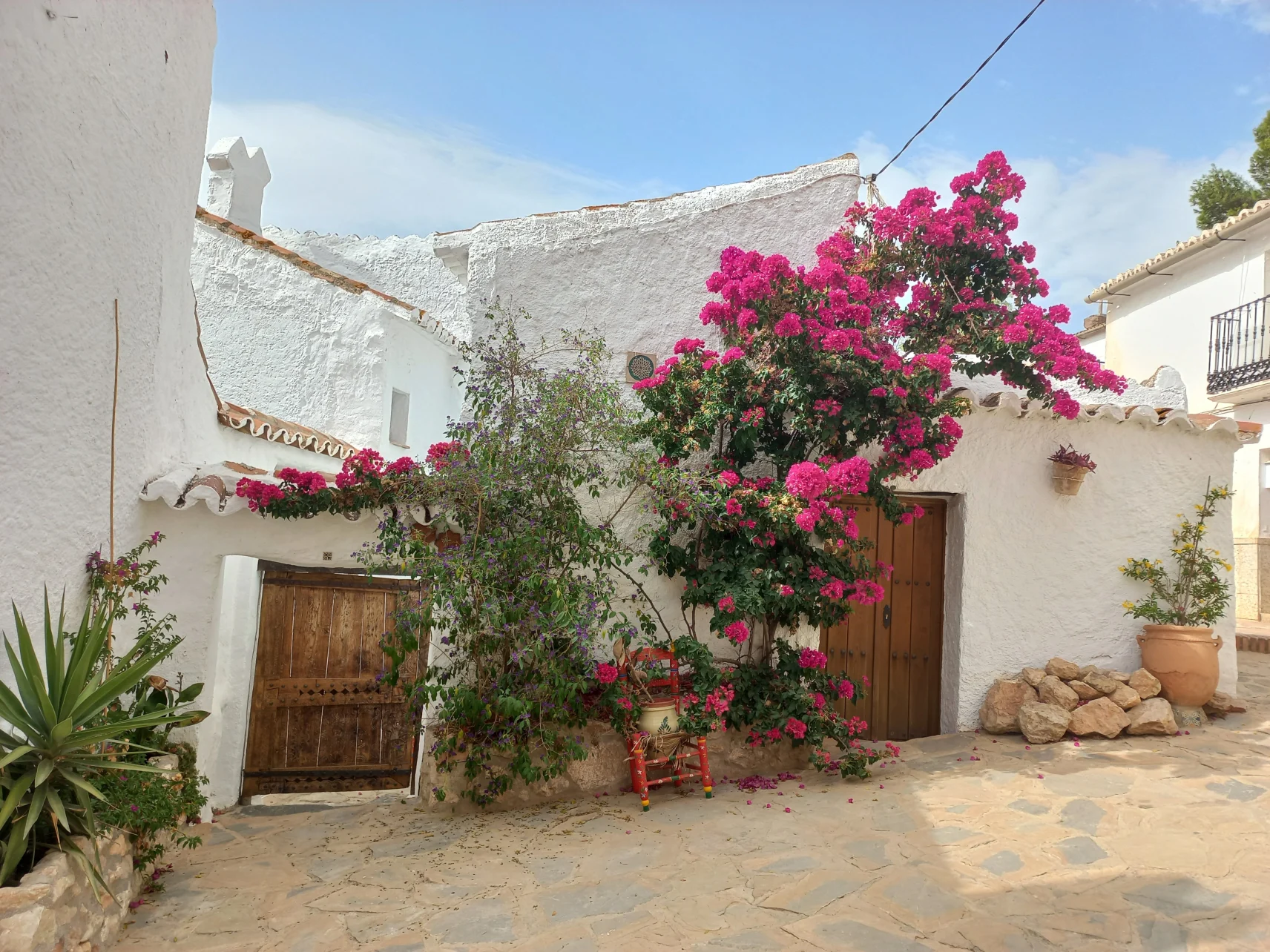
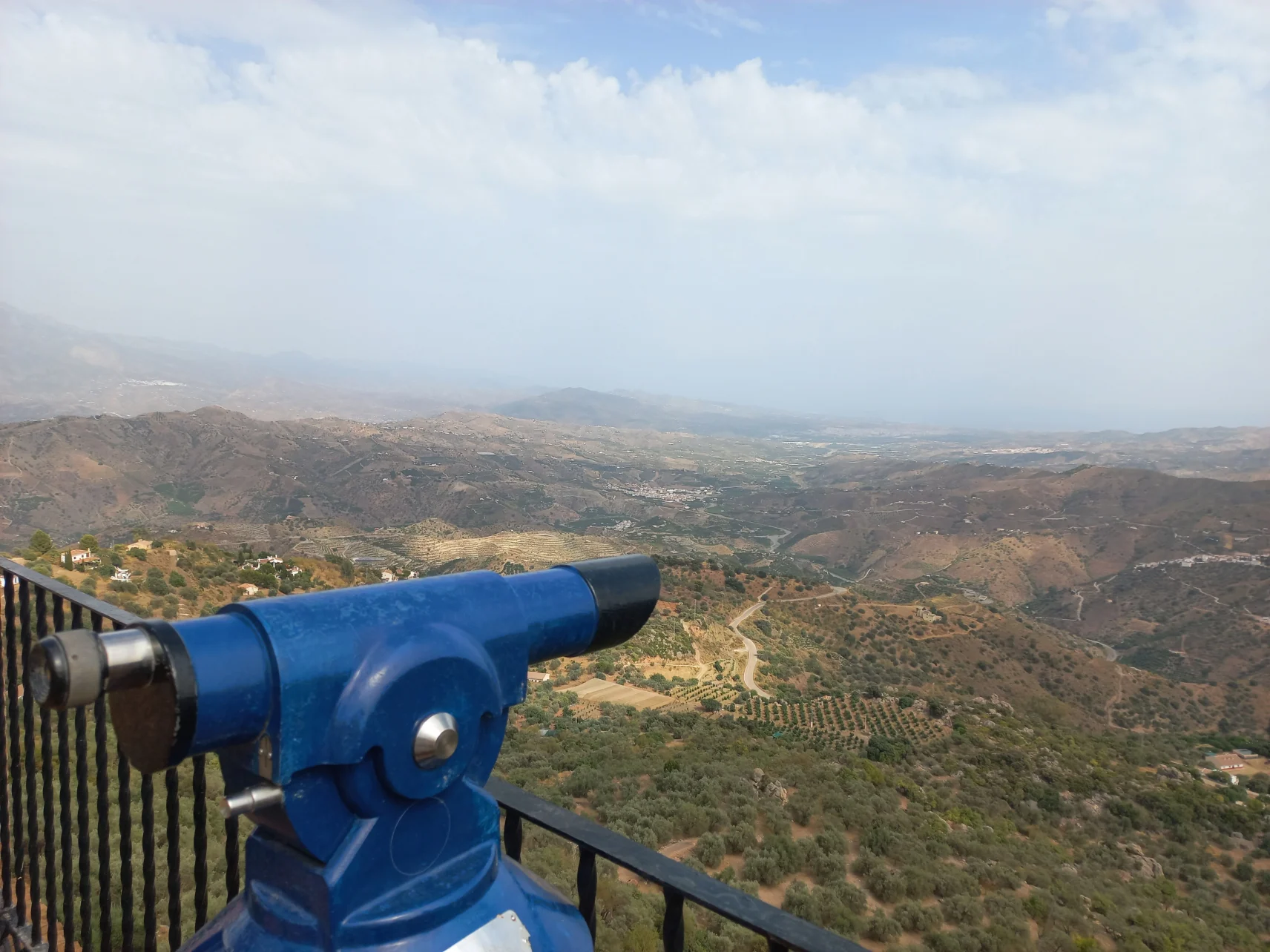
As we left the densely populated coastal area, the road passed by mango and avocado plantations, that gave a distinct – I would even say, tropical – vibe to the area. Orchards are abundant in La Axarquía because of its climate and soil composition, which makes it ideal for growing crops. White villages dotted the landscape like jewels, and once we were on top of a hill or a mountain and we turned back, we found stunning panoramic views of the Mediterranean. The map on my phone showed that we were a mere twenty kilometres away from the coast. But up there, in a village of whitewashed houses and pink Bougainvillea plants blooming in tiny gardens, it felt as if we had been taking a vacation from your own vacation, and leaving the Costa del Sol for a different, parallel world.
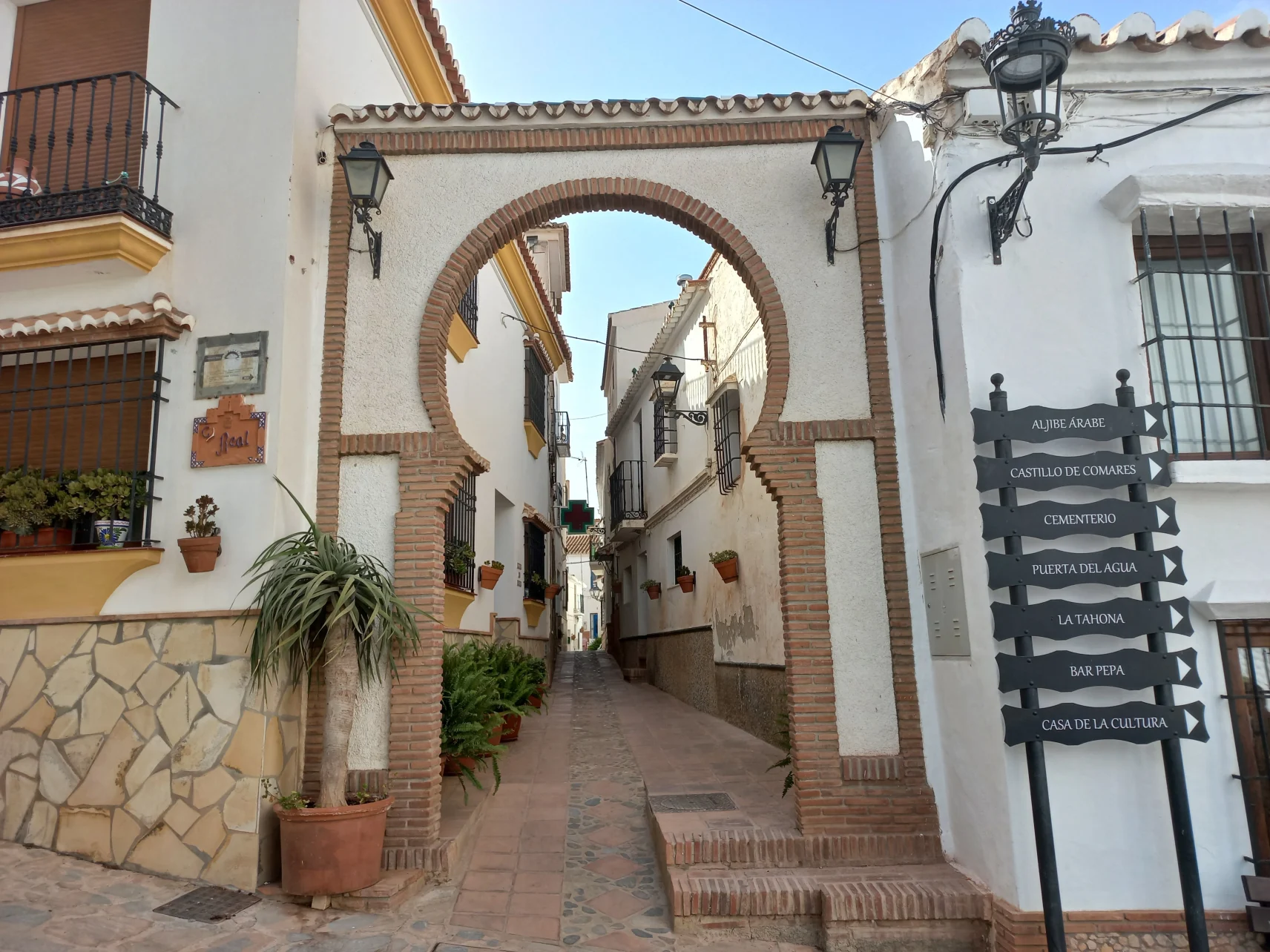
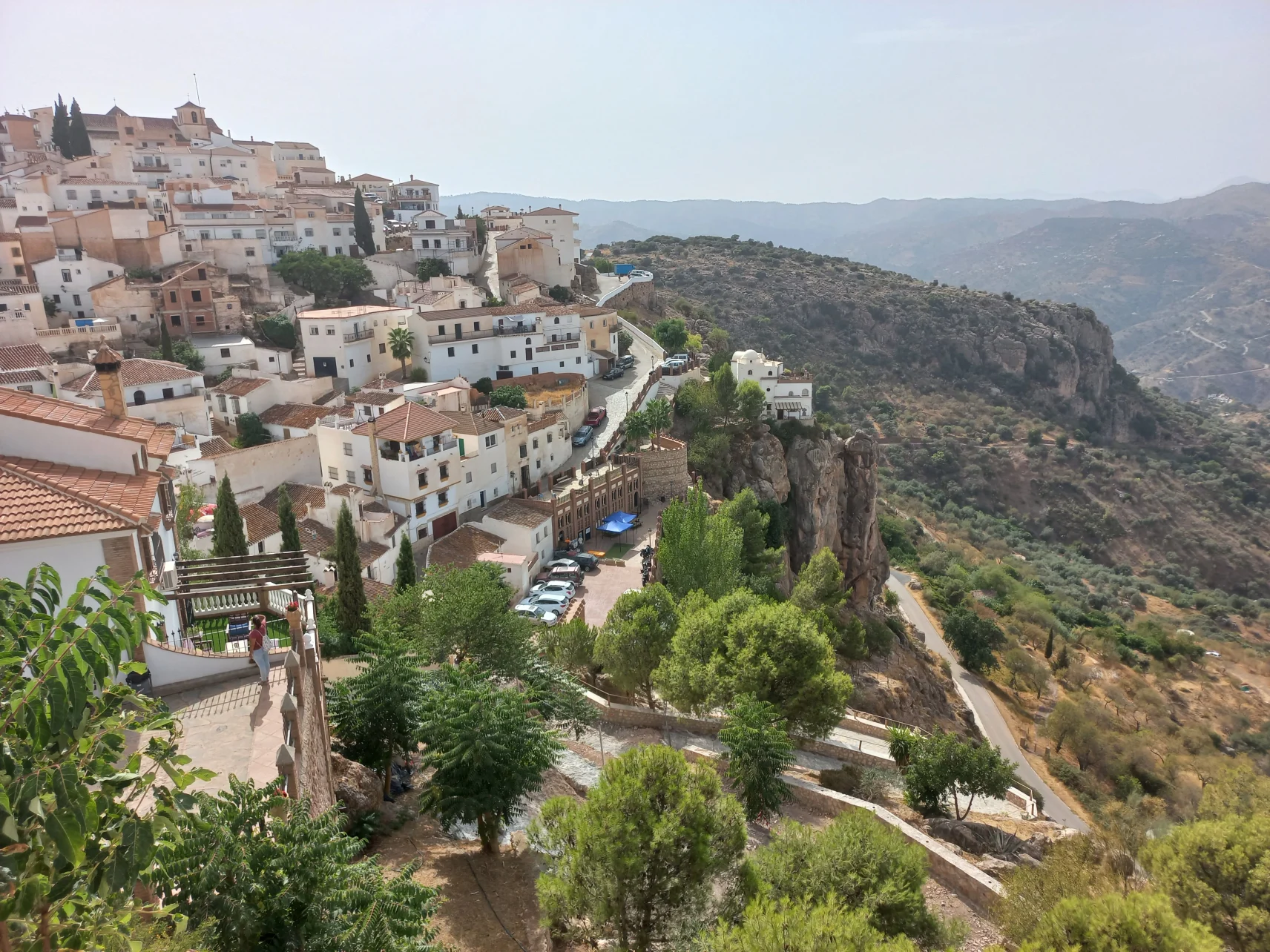
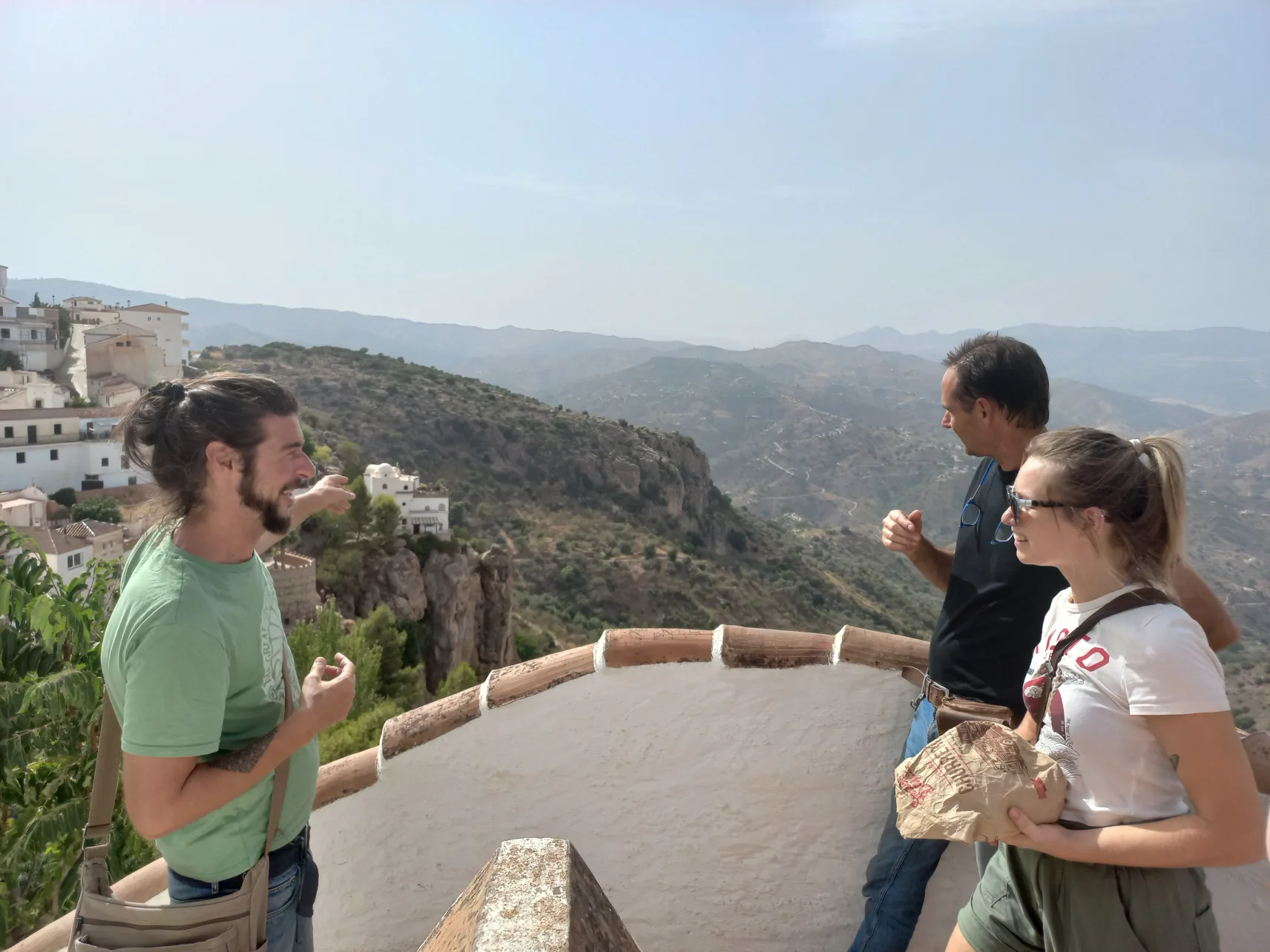
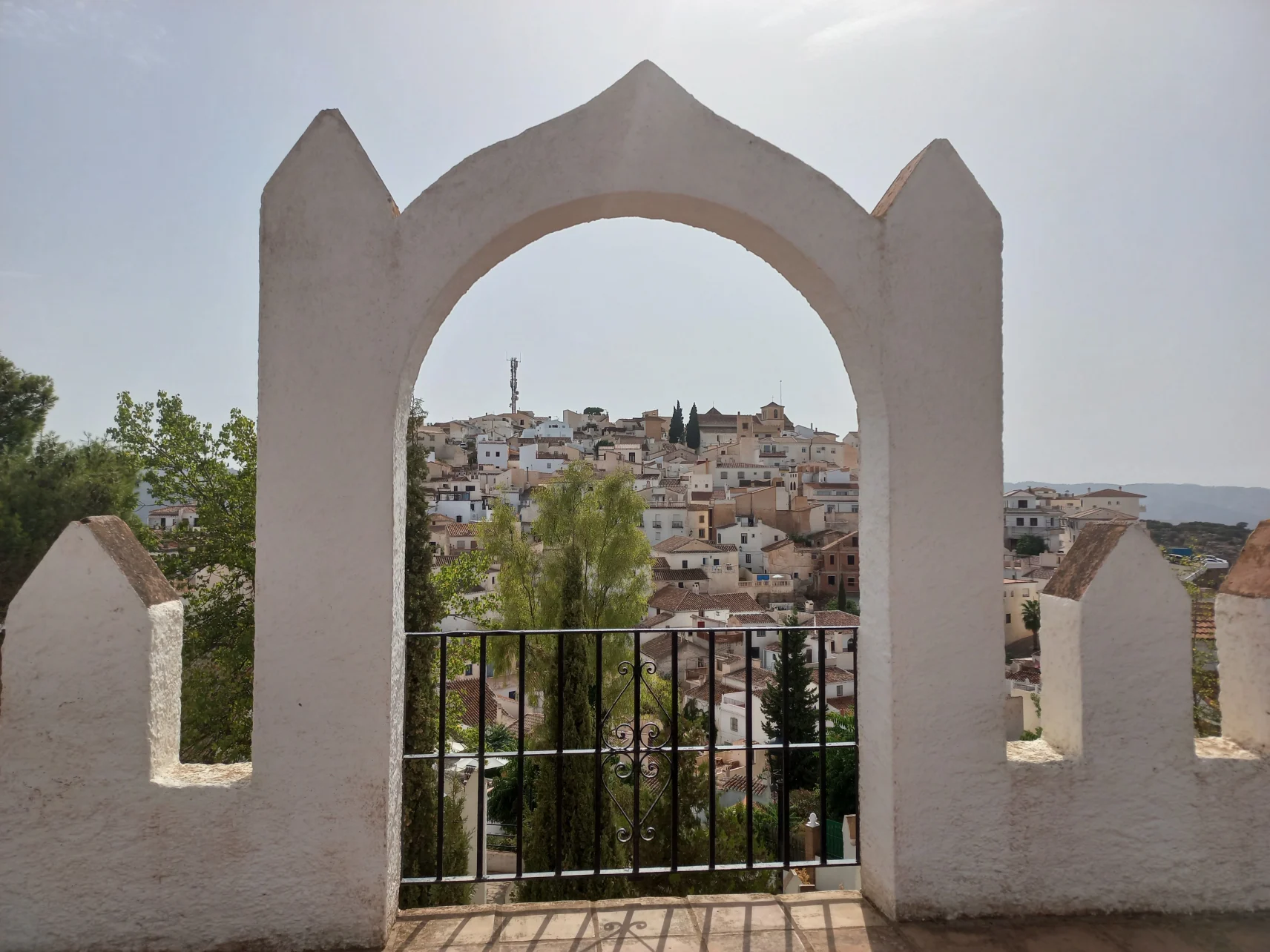
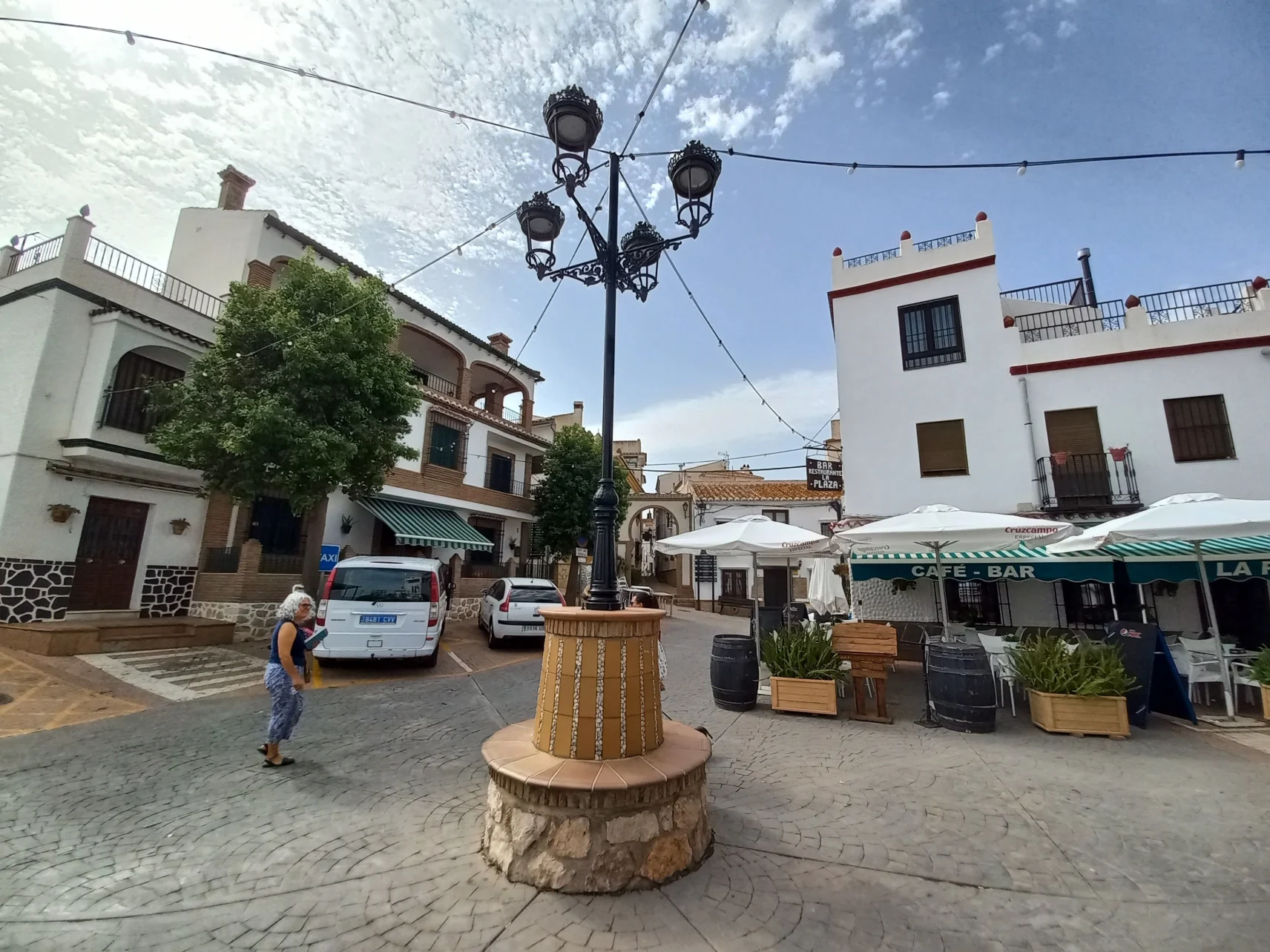
We spent some time in lovely Comares, possibly the most beautiful of La Axarquía’s hilltop villages. A small settlement north of Vélez-Málaga with a population of about a thousand people, Comares is really “a hidden gem” of the area. Founded by the Phoenicians more than 2500 years ago, the origin of the name of the village is from the Arabic word Qumaris, which means “a castle in the height” and it is easy to see why: its location on a hilltop gives it a panoramic view over the surrounding countryside. It is also home to some very interesting recent history: this traditional Andalusian village became a beloved destination for British and Dutch expats looking for sunshine and Mediterranean lifestyle yet getting away from the busy coastal area. As a result, among the locals peacefully drinking in one of the village's pubs, we also saw a few cheerful Brits. It would have been a common sight in a seaside resort, but I would not have expected their presence up here in the ancient village built on the hilltop.
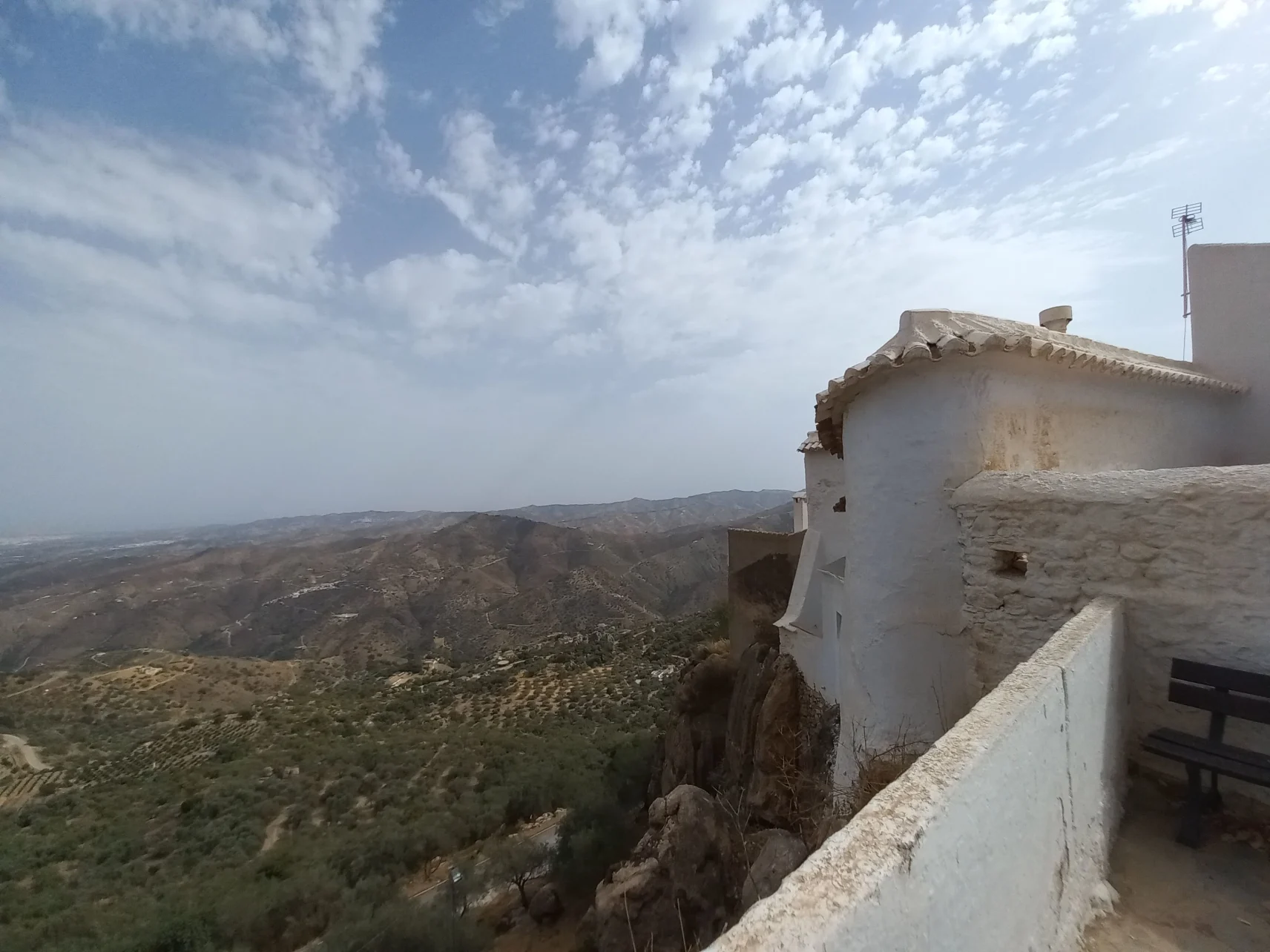
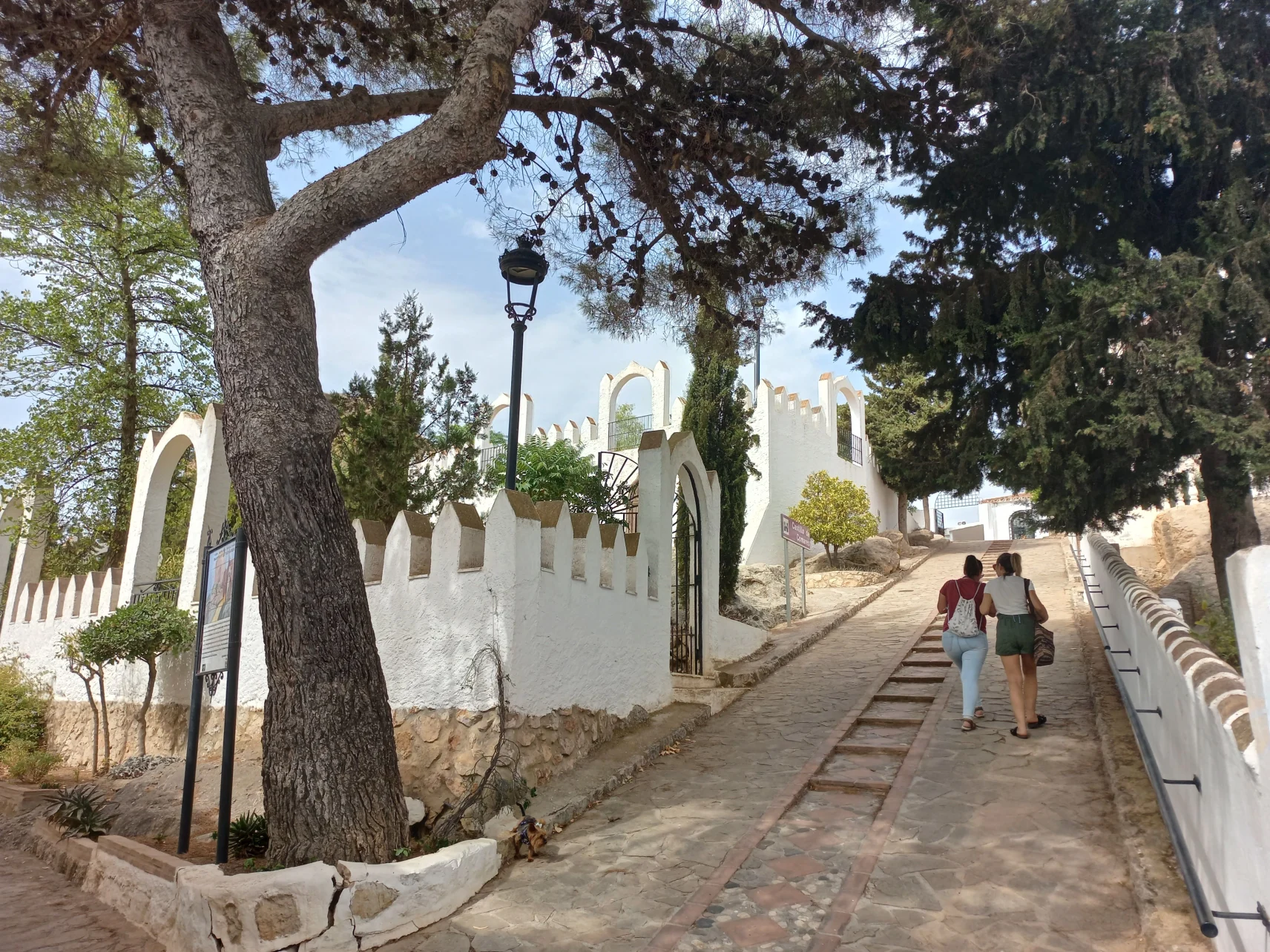
Manu guided us through the village, and as we arrived in the castle of Comares, we found something quite unexpected. There is not much “castle” left, only the remains of an Arab fortification located on the promontory upon which the village is built. While it is partially destroyed, and only two towers and scattered fragments of walls remain, it is well worth a visit for two reasons. First, the site was transformed to an urban cemetery with many “high-rise” constructions: graves placed on top each other within tall structures that resemble apartment blocks, and that give the place a rather quirky ambience. Second, due to its location, it is a magnificent viewpoint over the region and the sea.
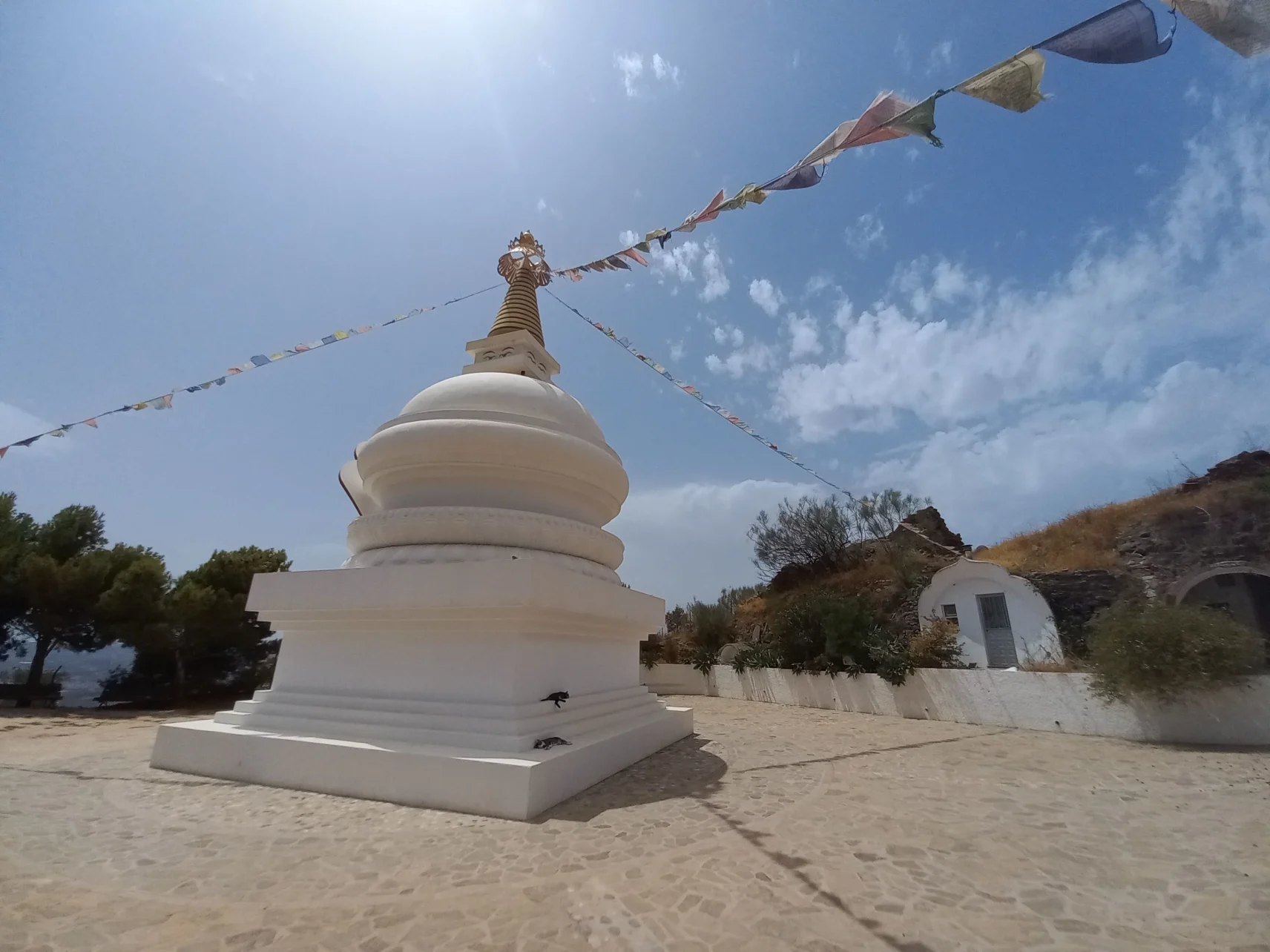
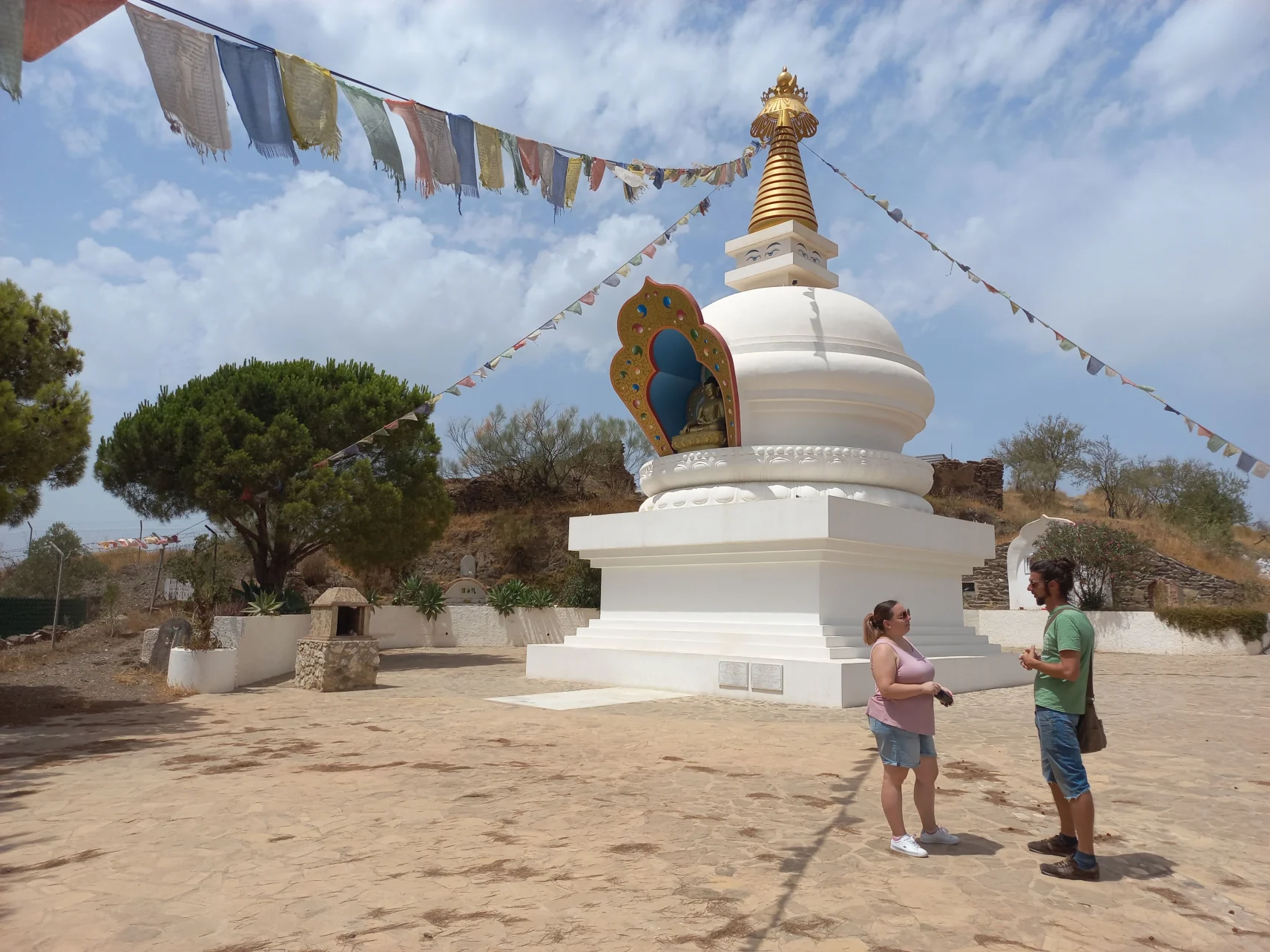
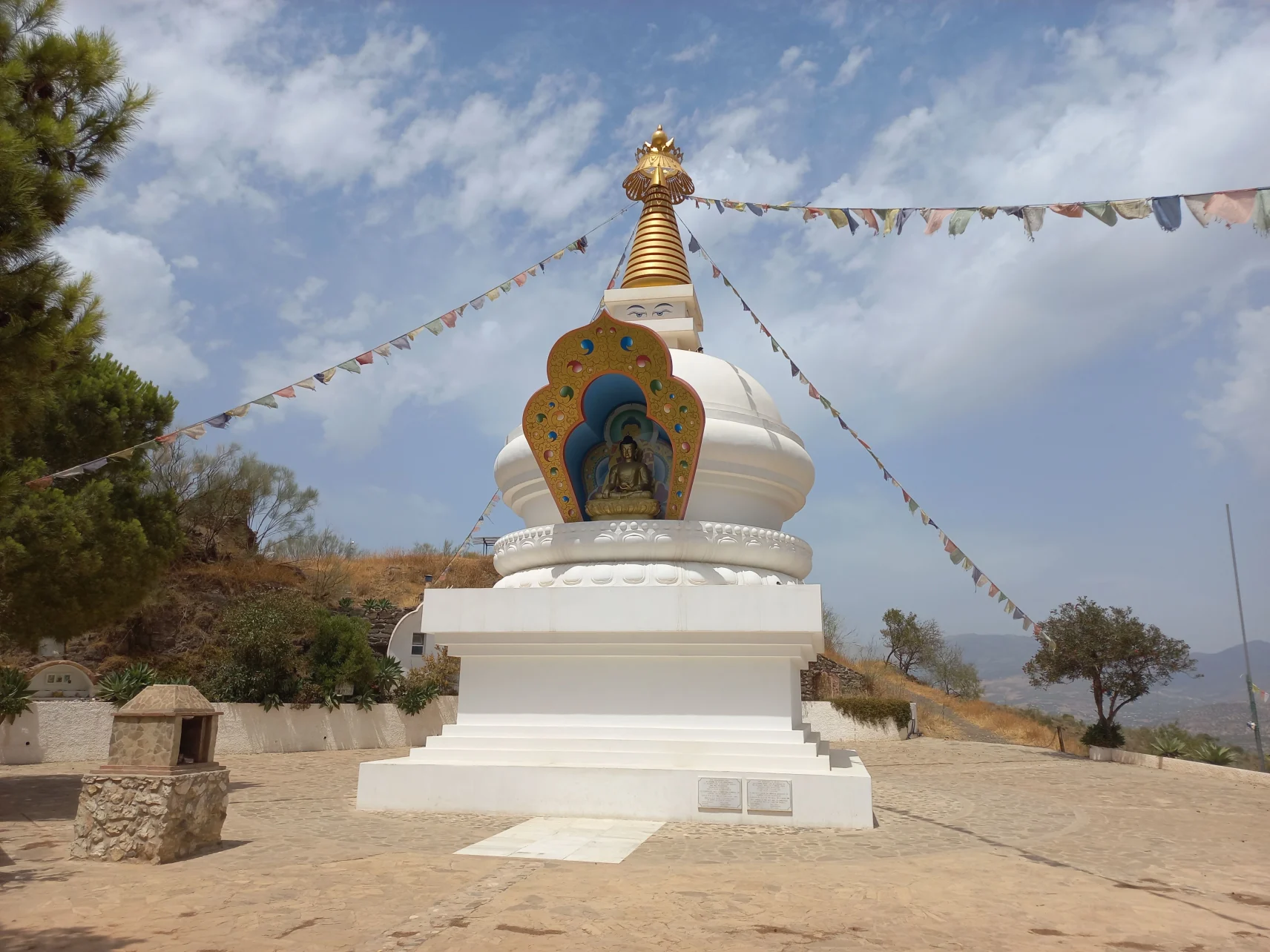
The other highlight of the day was located not more than ten kilometres as the crow flies, but it took a half-hour drive on the winding road to get there. As we got out of the van, the intense heat beat us. Is it really a good idea to walk on a hilltop during siesta hours? – I asked myself. Well, yes, it was. We arrived at a surprising place that didn't look like it was in Spain at all: a Tibetan stupa!
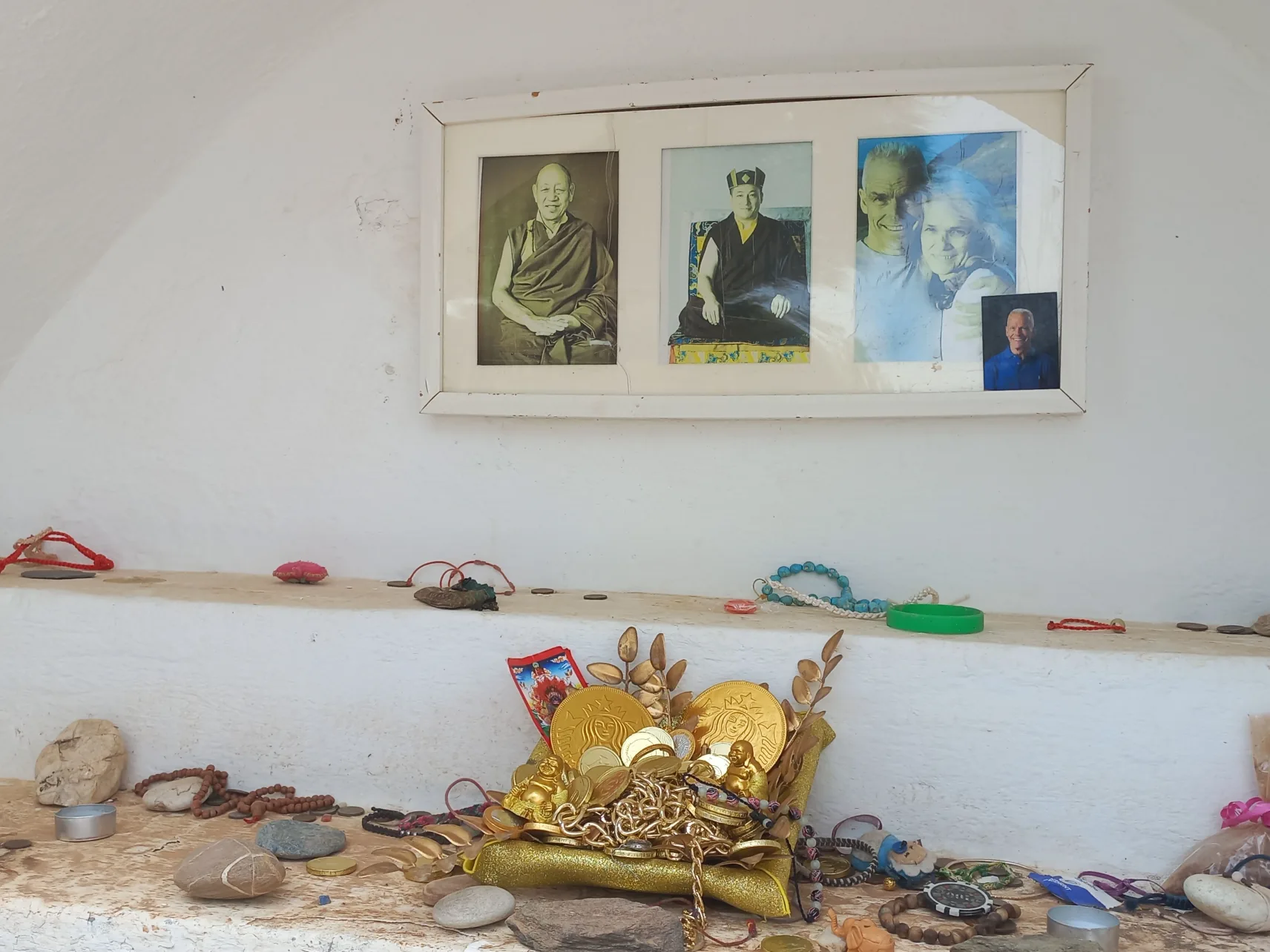
The magnificently located Karma Guen stupa is named after a holy place in Tibet that was founded by Karmapa Dusum Khyenpa, the first consciously reborn Yogi of Tibet. It was thanks to the Diamond Way international Buddhist community, and a generous Andalusian landowner, that this fascinating place came into being. While it is a meeting point of Buddhists and it hosts several cultural and religious activities throughout the year, it was completely deserted when we visited it. Maybe it was better this way: we had the place all to ourselves, and we could surrender to the incomparable charm of the hilltop stupa.
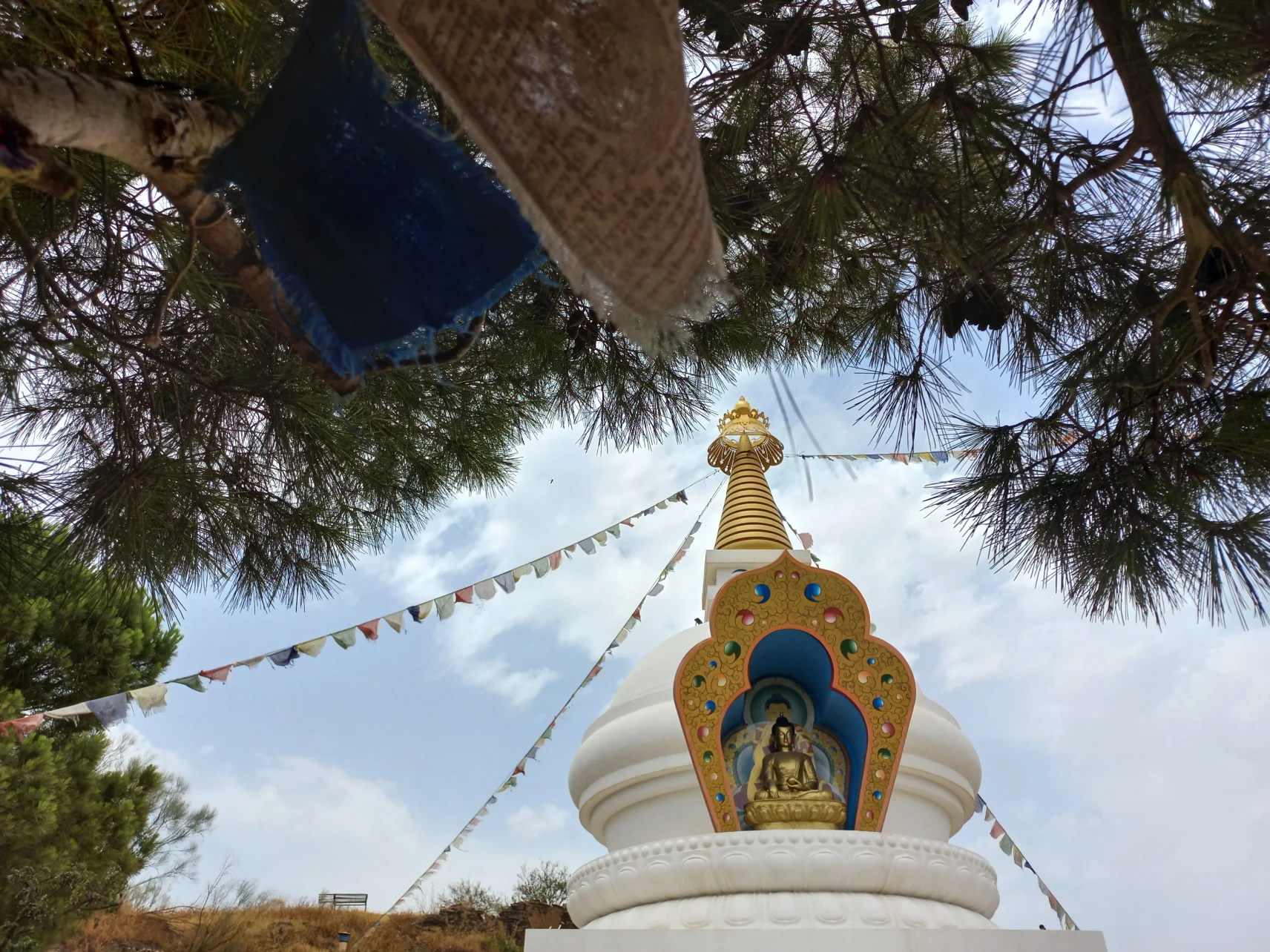
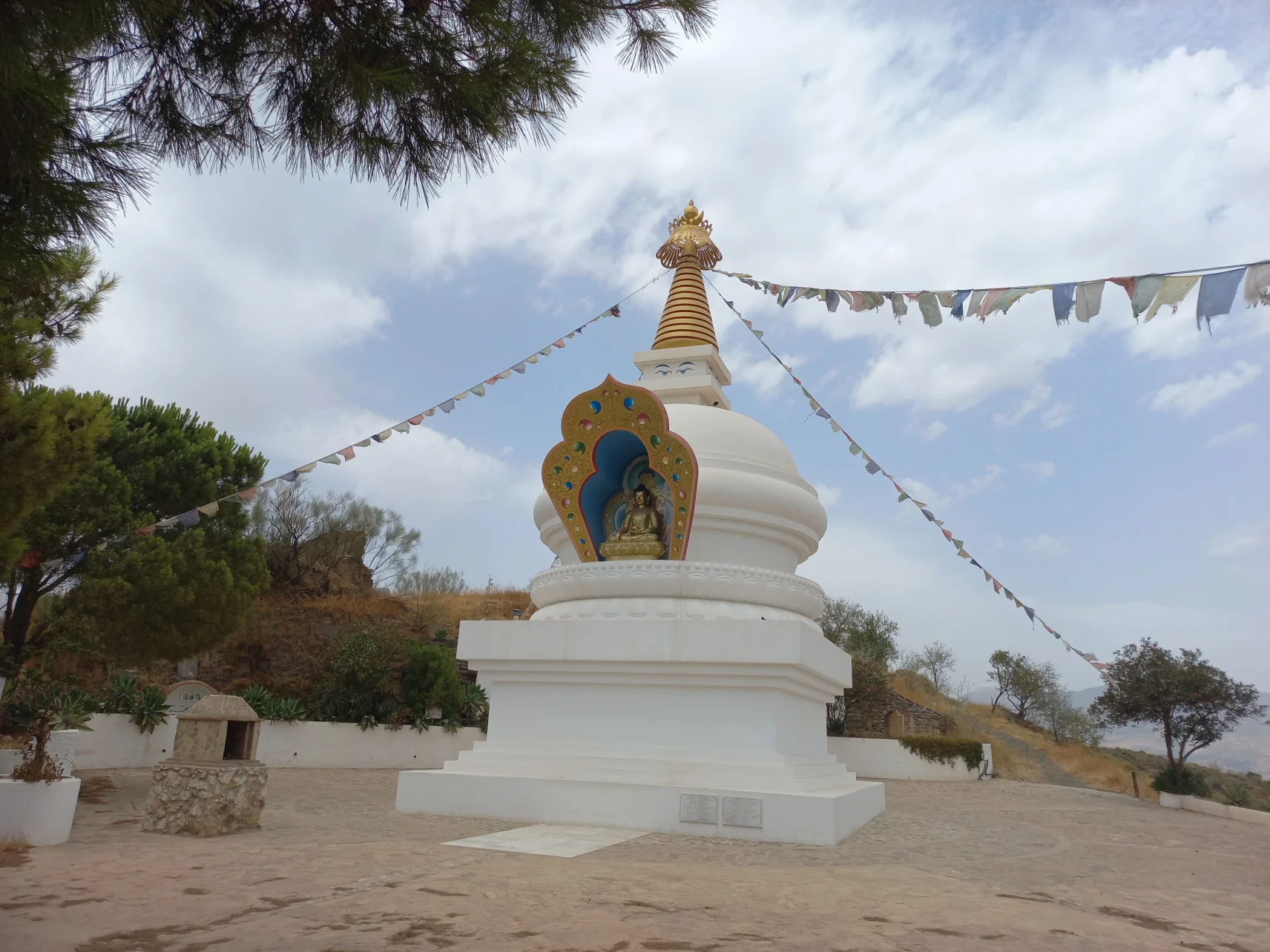
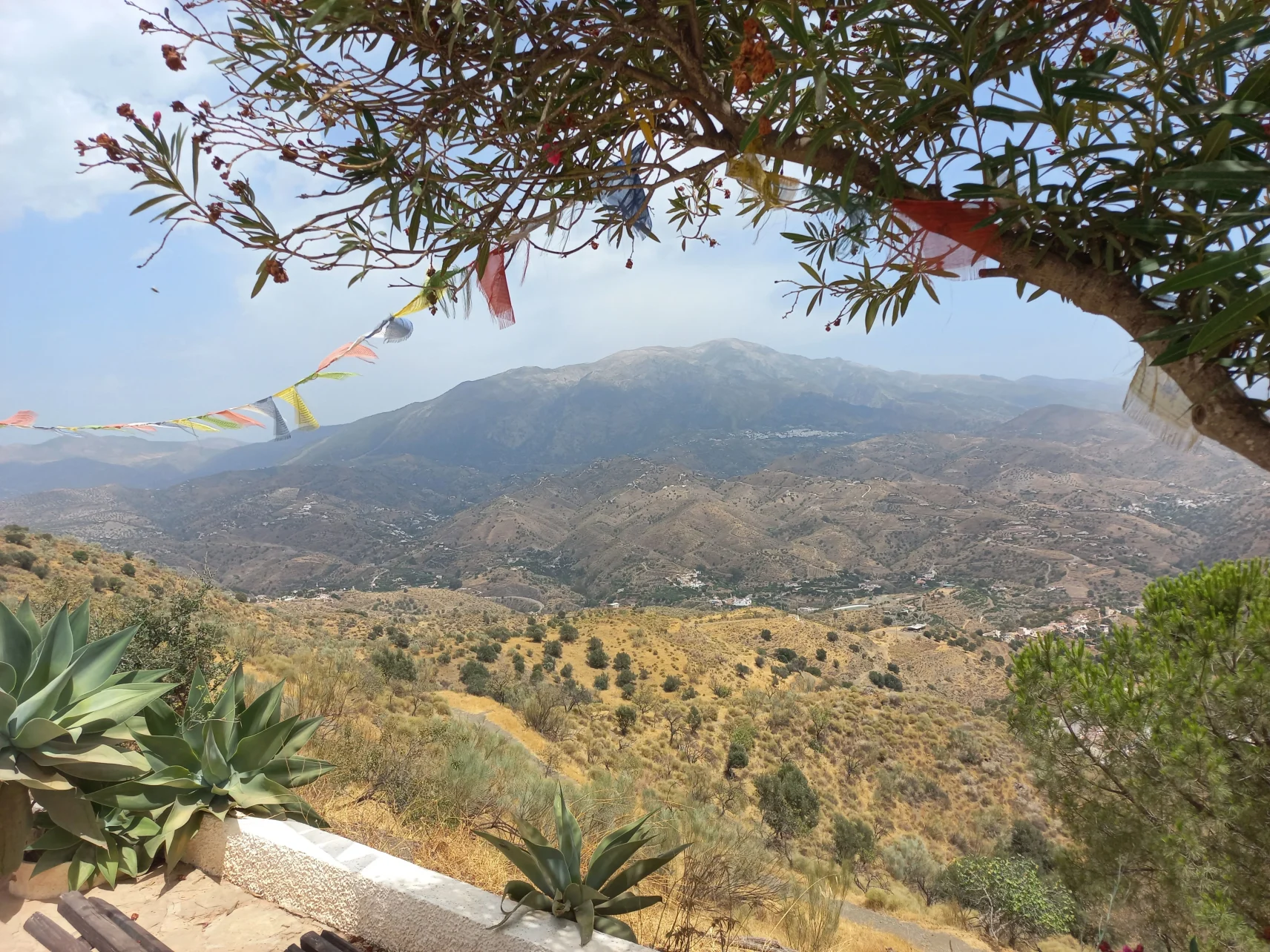
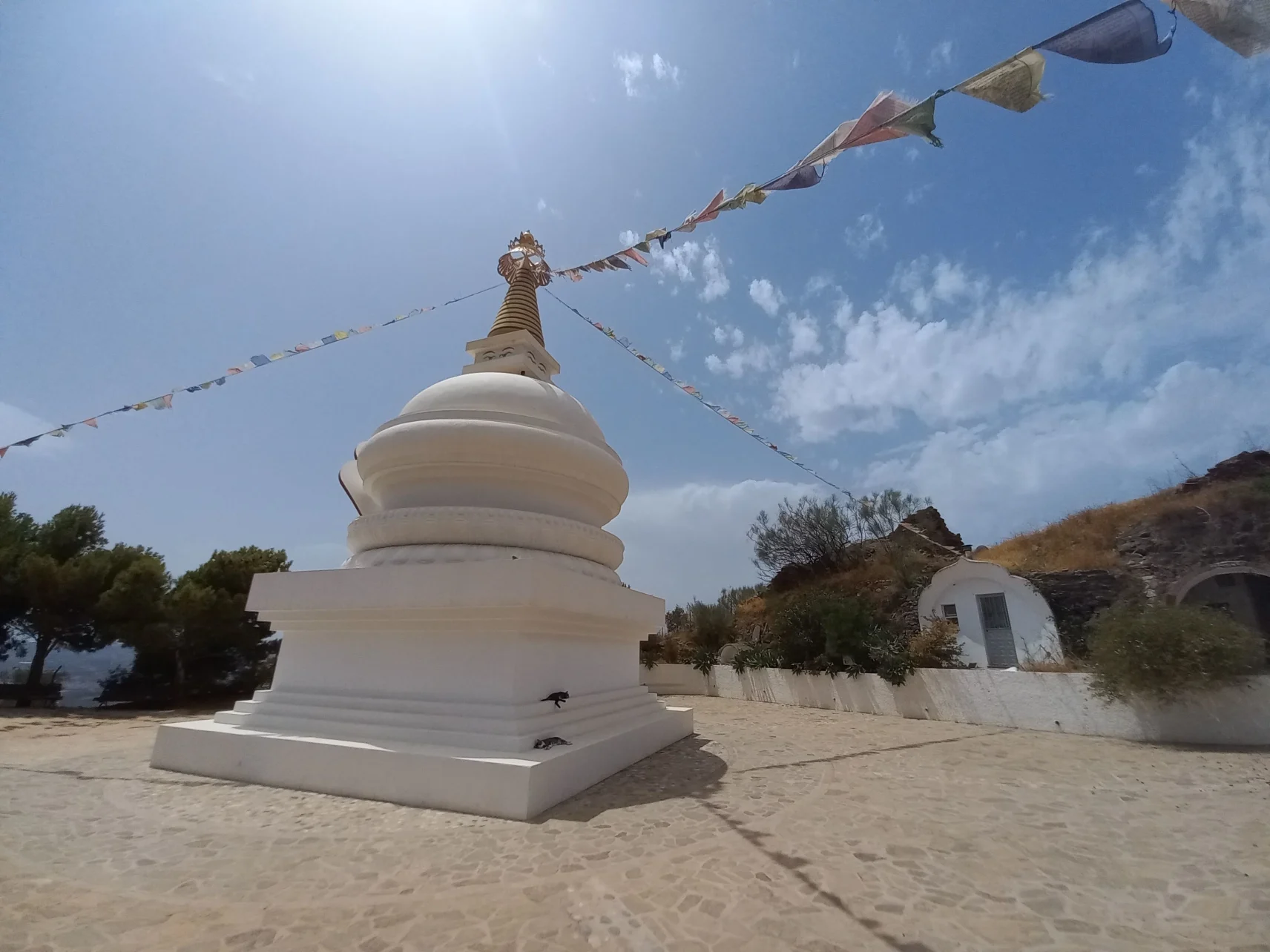
When I travel, I sometimes like to play mental games. If a place doesn't fit its surroundings and looks like it is in another country, I like to look around to see if I can find any sign that spoils the illusion of the place being somewhere else. So, I looked at the strange, misplaced stupa to see if there would be something very Spanish about it. Well, I couldn't find anything. The beautiful, snow-white, bell-shaped building had a gold top decoration and a golden Buddha statue enthroned in a blue recess. It was surrounded by colourful Buddhist prayer flags flying on ropes stretched in all directions. The illusion was flawless. The panorama was impressive, and with a bit more of imagination, I could make myself believe imagine that I was seeing the landscapes of a secluded valley in Central Asia.
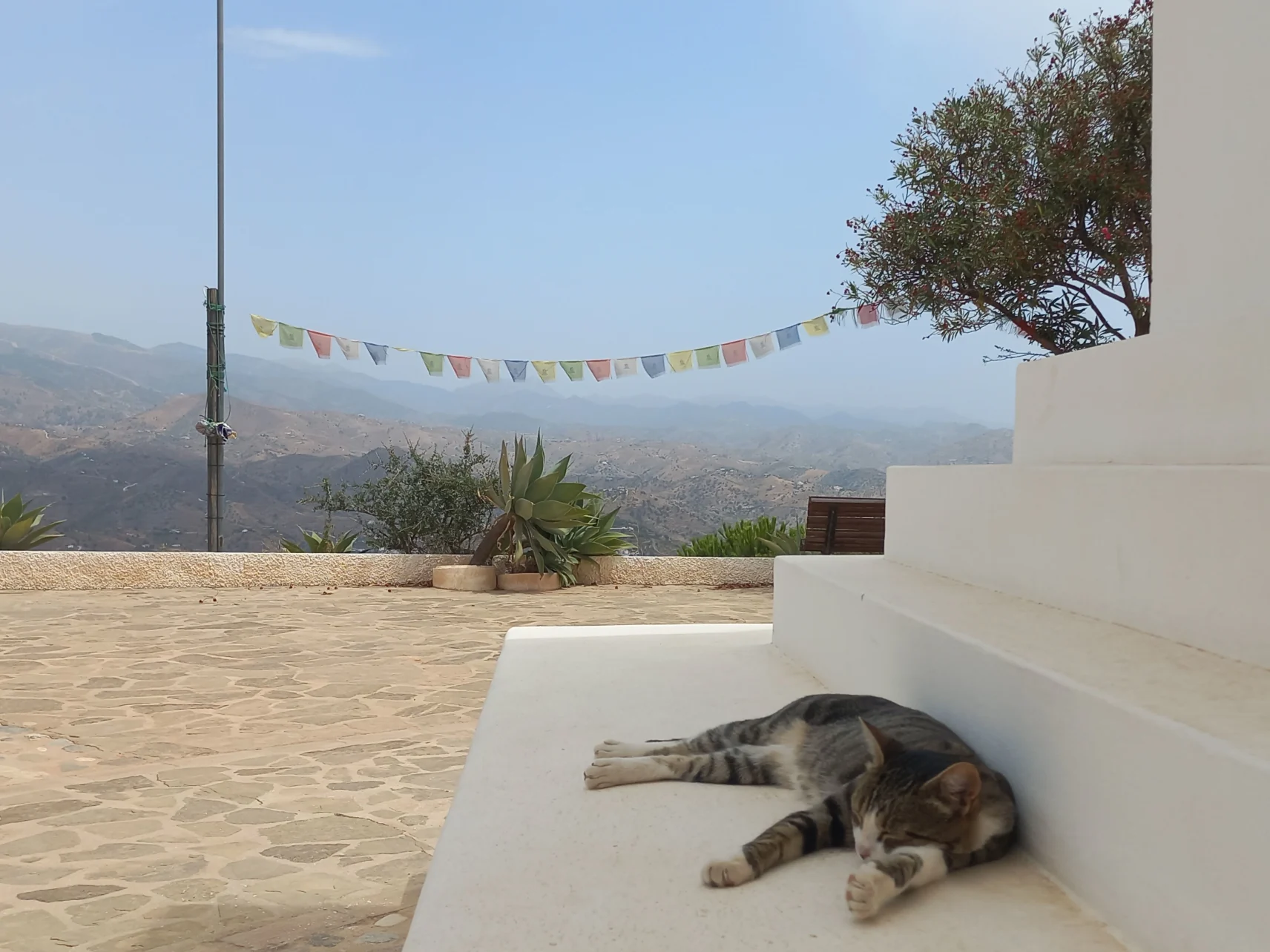
I walked around the stupa, and on its shady side, on the bench of the building, a cat was sleeping peacefully. A tabby grey and white kitten with that otherworldly spiritual calmness that only cats can possess. I thought that this cat also fitted into the picture. Cats are cats, that's a universal point. Once I'm reborn, I want to live a peaceful and purr-fect life of a cat of a Buddhist stupa.
It doesn't matter if it's in Tibet or Andalusia.
- Author: Béla Soltész
- Pictures: Anazu Design