Cútar Manuscripts: a time capsule in the Axarquía - Legajos Sueltos
The Axarquía region of Malaga guards stories within the contours of its white villages that surpass fiction. Among them, Cútar stands out—a small municipality whose toponym derives from the Arabic Aqūṭa, meaning "place of sustenance" or "fountain of paradise".
At Travel Factory Andalucía, we design customised experiences and tours aimed at connecting the traveller with the most intimate legacy of our province, discovering the cultural heartbeat that still pulses within the walls of these ancestral enclaves.
Today, in collaboration with Legajos Sueltos, we invite you to travel back in time to discover one of the most astonishing archaeological and documentary findings in southern Spain: the secret that Cútar hid within its walls for five centuries.
A chance discovery behind a partition wall
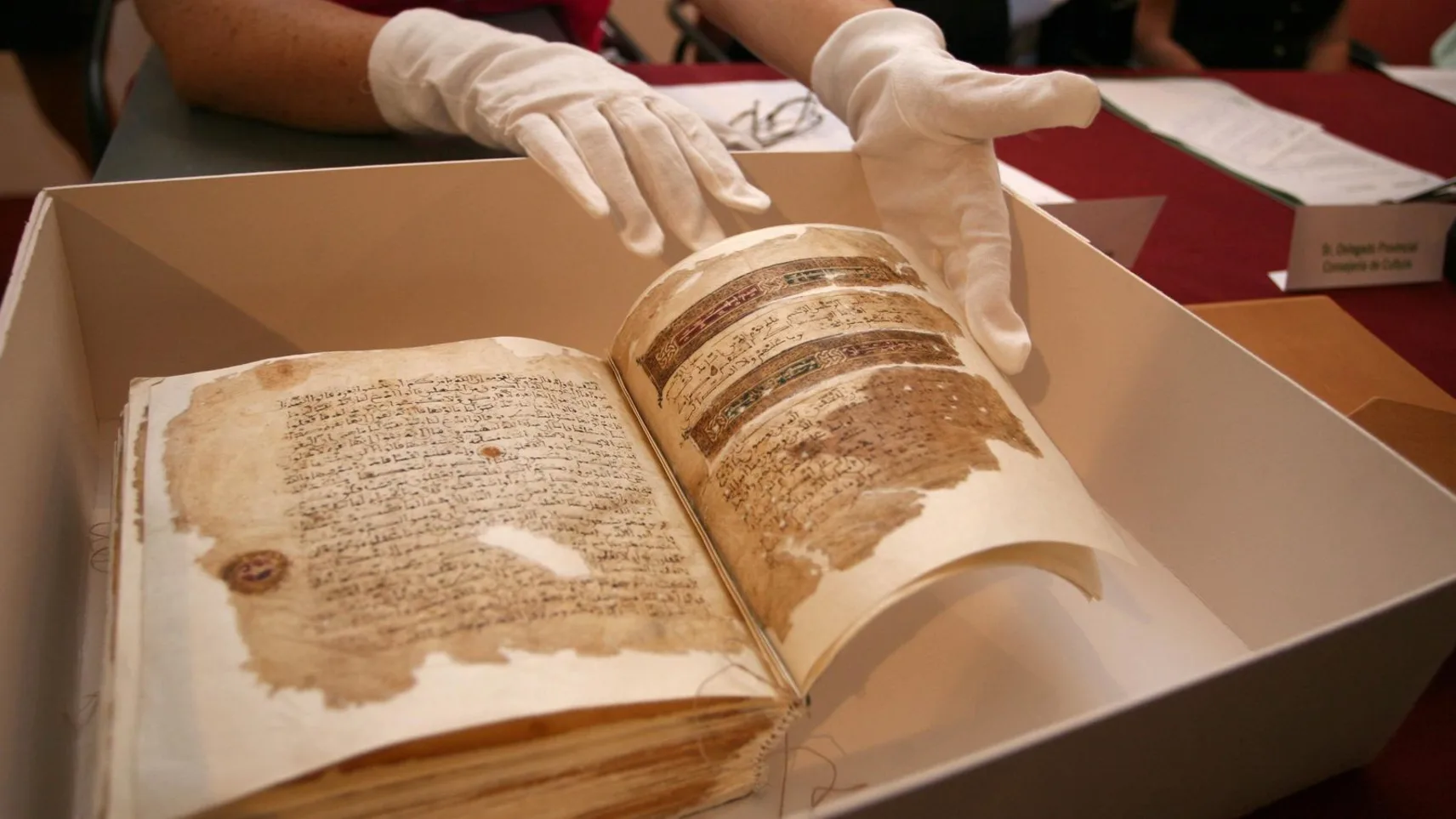
On the 20th of June 2003, during renovation works on a house in Cútar, bricklayers found a bundle of Arabic documents intentionally hidden among straw and walls, which were in a surprisingly good state of conservation. Analyses confirmed that it was the personal library of Muhammad al-Ŷayyār, a prominent alfaquí (jurist) and ulema (scholar) of the hamlet at the turn of the 15th to the 16th century.
The three treasures hidden in the wall
The discovery meant the recovery of three exceptional manuscripts:
- The "handbook of trades": a practical legal manual consisting of 111 folios with notarial templates (contracts, wills), rules for the distribution of inheritance, and Islamic laws on morality.
- The personal notebook: 134 folios containing study notes and a diary detailing local events of the 16th century, including the earthquake of 1494.
- A 12th-century Qur'an: a valuable inherited copy that served as a symbol of resistance and faith in the face of persecution.
Muhammad al-Ŷayyār: the alfaquí of the hamlet
Despite his potentially humble origins (his name suggests a stone-cutter or builder), Al-Ŷayyār became a cultural reference point after being released from captivity in Seville and settling in Cútar, where he served as an imam and alfaquí. His work was fundamental to the Andalusi community of the area.
The breach of the capitulations and the concealment
Following the Royal Pragmatic of 1501 and the forced conversion of 1502, which banned the Arabic language and ordered the burning of manuscripts, Al-Ŷayyār walled up his texts to save them. This act of resistance allowed this historical memory to be preserved for five centuries, reflecting the dramatic transition of the Moriscos community.
The pleasure of travelling and discovering living legends
Visiting the Axarquía through the cultural tours organised by Travel Factory Andalucía is the finest way to immerse yourself in real and fascinating stories like that of Muhammad al-Ŷayyār.
We take care of designing tailor-made and bespoke itineraries, allowing you to walk the paths, squares, and landscapes of the region at a leisurely pace, enjoying every detail and the historical wealth treasured by our inland villages.
If you are passionate about history and culture, and wish to plan a guided getaway to discover the best-kept secrets of the province, we invite you to contact our team to shape your next Andalusian experience.