Almazara El Toro: the designer museum by Philippe Starck in Ronda

Experiential tourism seeks to connect deeply with the gastronomic and ecological roots of a territory. In the Serranía de Ronda, the millenary culture of the Andalusian olive grove has undergone a contemporary transformation thanks to Almazara El Toro, an ambitious thematic museum and cultural complex that houses and breathes life into the renowned organic olive oils of the LA Organic firm.
Designed by the french industrial creator Philippe Starck, this space stands out on the international stage as the world's first designer olive mill (almazara de autor), seamlessly uniting contemporary art with ancestral knowledge.
Philippe Starck: the philosopher of democratic design and emotion
To appreciate the true magnitude of this work, it is essential to understand the trajectory of its creator. Born in Paris in 1949, Philippe Starck is one of the most prolific and influential designers and industrial engineers in the world. His career encompasses thousands of projects, ranging from iconic everyday objects and furniture to monumental works of architecture and hotels in major global capitals.
A pioneer of what he terms "democratic design", Starck has always advocated for eliminating the superfluous to focus entirely on the essence and service to human beings.
When projecting Almazara El Toro, the French creator applied this very philosophy of austerity, rigour, and authenticity. He conceived the building as a "minimal tool" and, simultaneously, as a "monumental temple" where a sacred respect for olive oil merges with emotion and visual poetry.
Starck himself defines this project as a pure reflection of Andalusia and as "an unusual, incredible, and miraculous place".
A legacy transformed into an architectural landmark
The origins of this enclave can be traced back to the work of a community of nuns in Ronda who, more than two centuries ago, began producing olive oil artisanally using centenarian trees on the ancestral estate of "La Amarilla".
This profound respect for the land was rescued by the project's visionary, Pedro Gómez de Baeza, who conceived the idea of translating the successful model of wine tourism—drawing inspiration from architectural landmarks like Frank Gehry's Marqués de Riscal winery—into the world of olive oil. Although Gómez de Baeza sadly passed away in June 2024 without seeing the project fully completed, his vision became a reality shortly after with the official inauguration of the Almazara El Toro complex in October of that same year.
The facilities unfold across a 26-hectare estate where more than 6,500 certified olive trees grow. Autochthonous varieties such as hojiblanca, arbequina, picual, and marteña are cultivated here under strict organic farming criteria, completely eliminating synthetic fertilisers and chemical additives to shape the premium Extra Virgin Olive Oil (EVOO) of Almazara El Toro & LA Organic.
A surrealist monolith Integrated into the mountain range
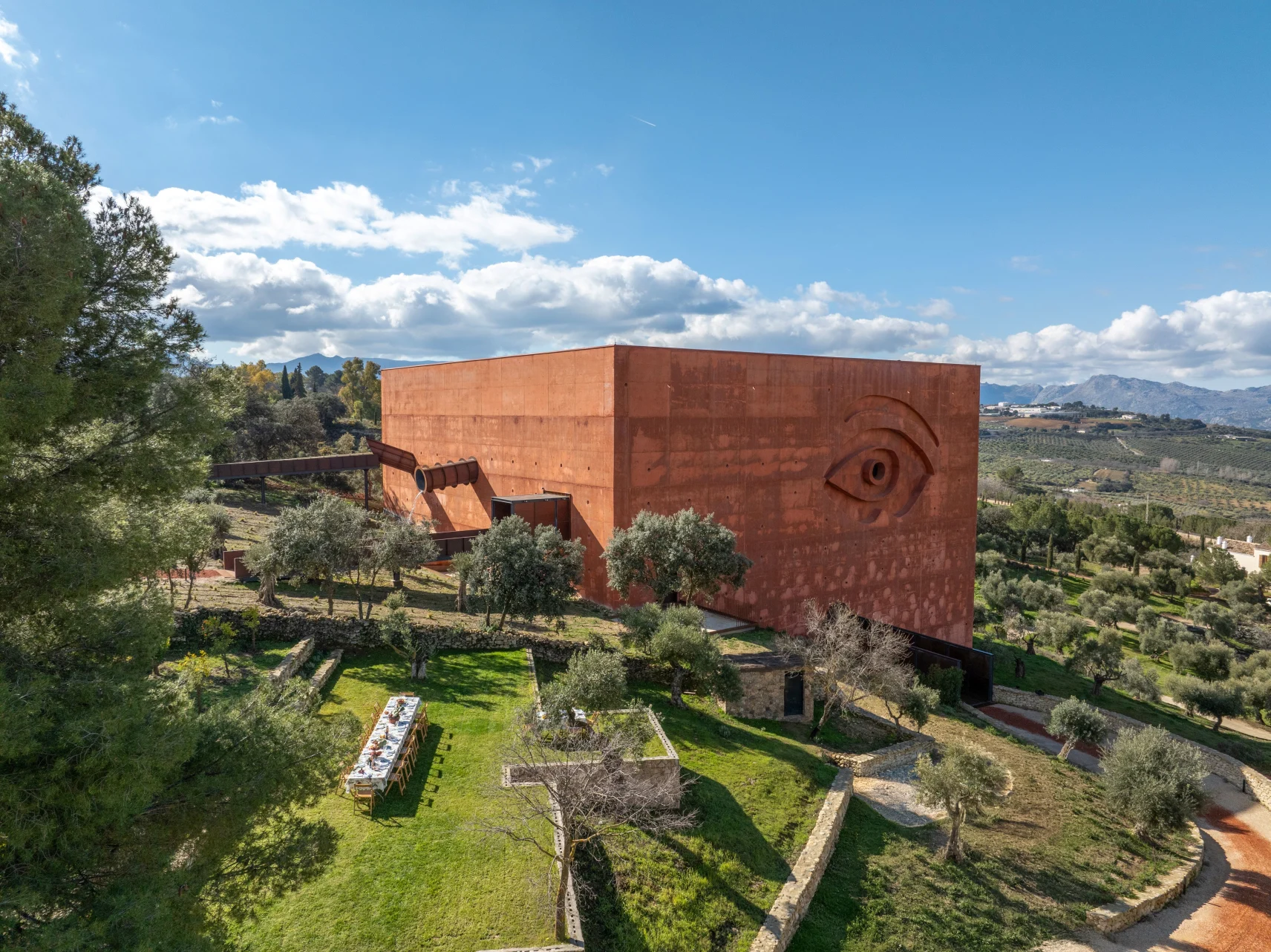
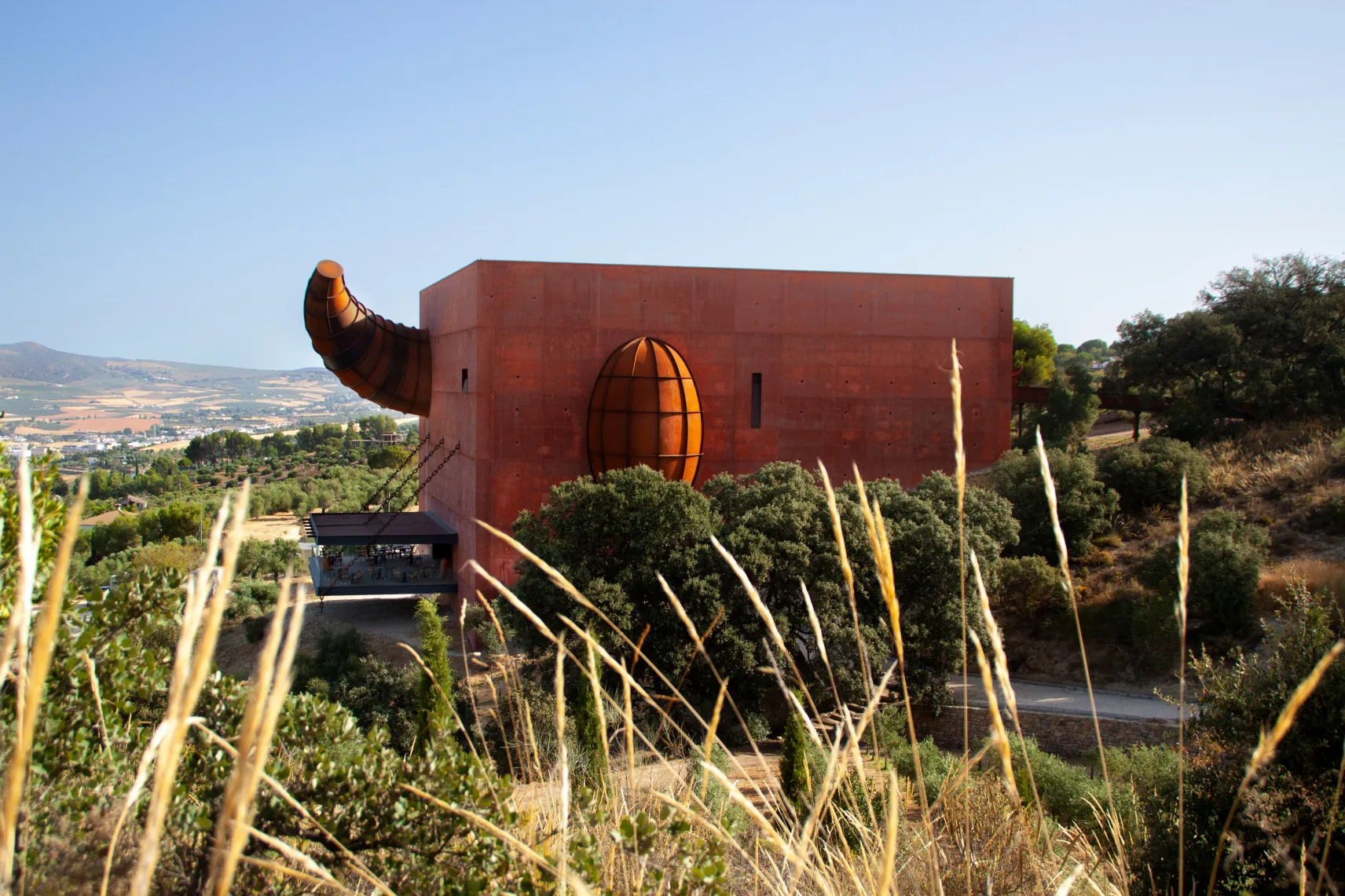
The architecture of Almazara El Toro breaks away from the conventions of traditional Andalusian rural aesthetics through a ground-breaking and distinctly surrealist approach. Upon approaching the estate, visitors encounter a large monolithic concrete cube tinted in an intense terracotta red, evoking the very tone of the earth on which it stands. For Starck, this minimalist block represents the spiritual strength and passion of Andalusia.
The building's façade becomes an artistic canvas rich in local symbolism:
- The Bull's Horn: a colossal steel structure that juts out from the main façade, paying direct tribute to the name of the mill and the historic bullfighting tradition of Ronda.
- Picasso's Eye: an immense eye moulded directly into the concrete that appears to watch over the olive grove, serving as a homage to the Malaga-born painter and the Andalusian surrealist avant-garde.
The commitment to the surroundings is not merely aesthetic, but also ecological. The building actively contributes to environmental conservation and sustainable urban development in Andalusia. It was constructed using recycled concrete and plastics, and its climate control system utilises existing external biomass, thereby minimising its environmental footprint.
The interior journey: from medieval castle to the press
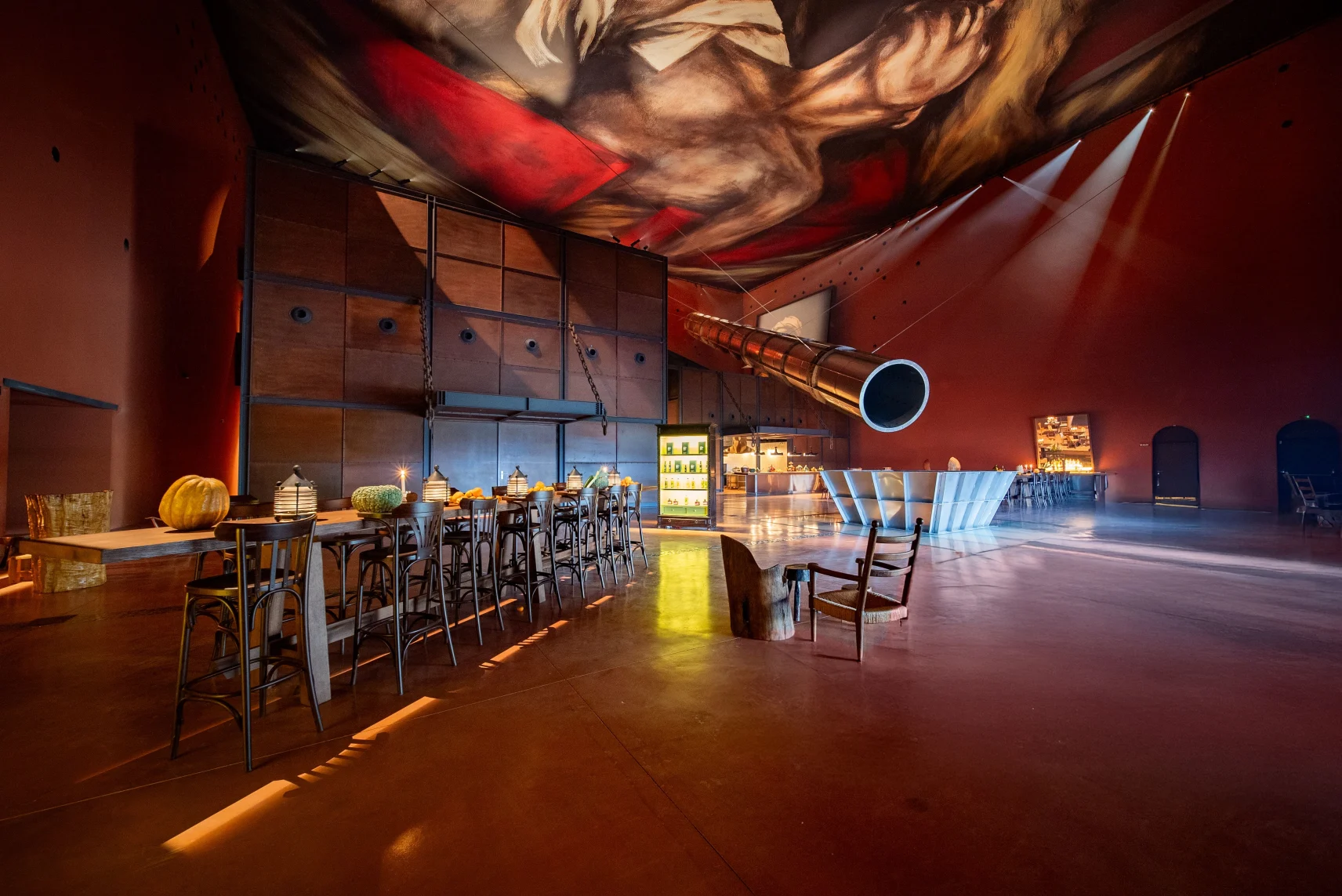
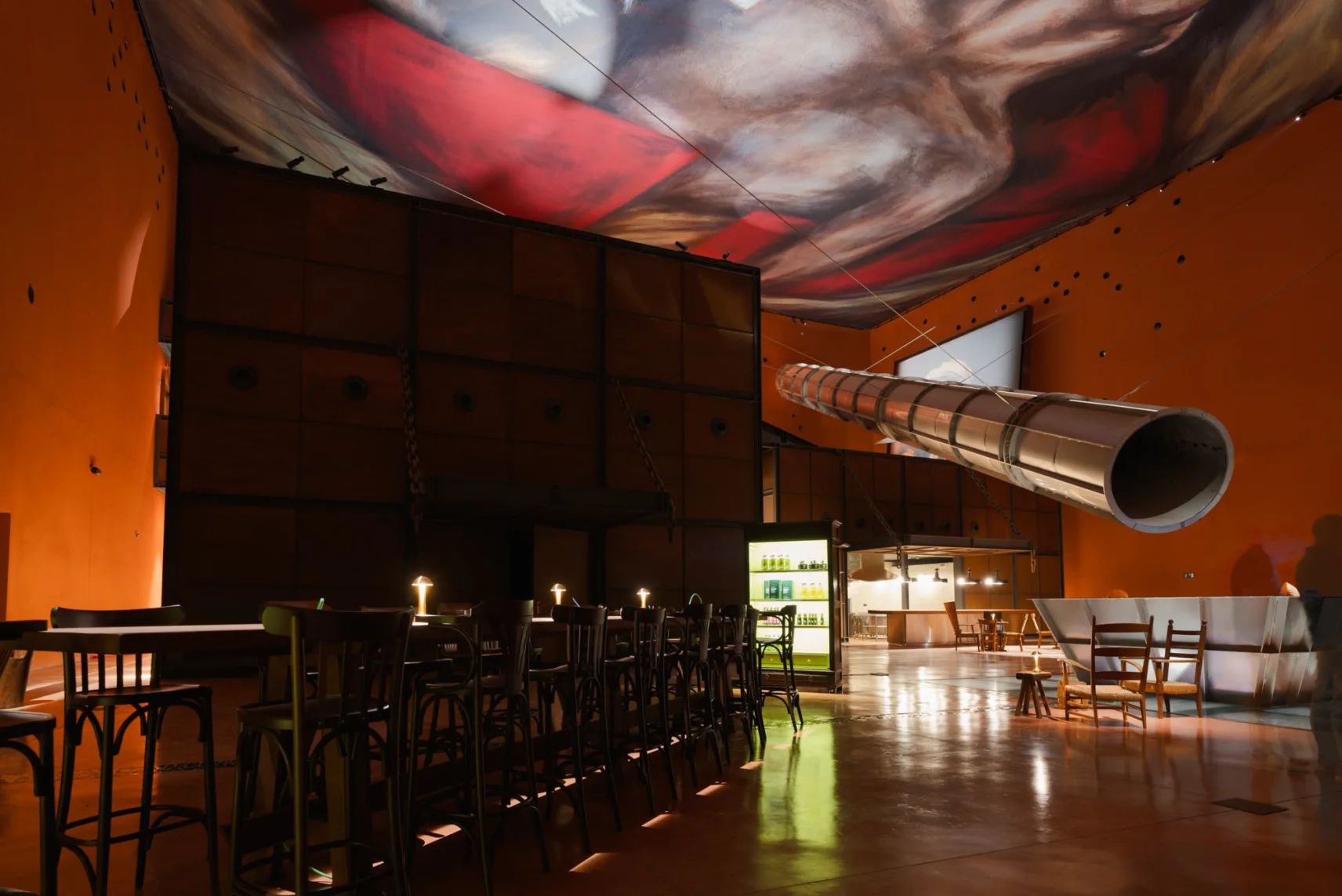
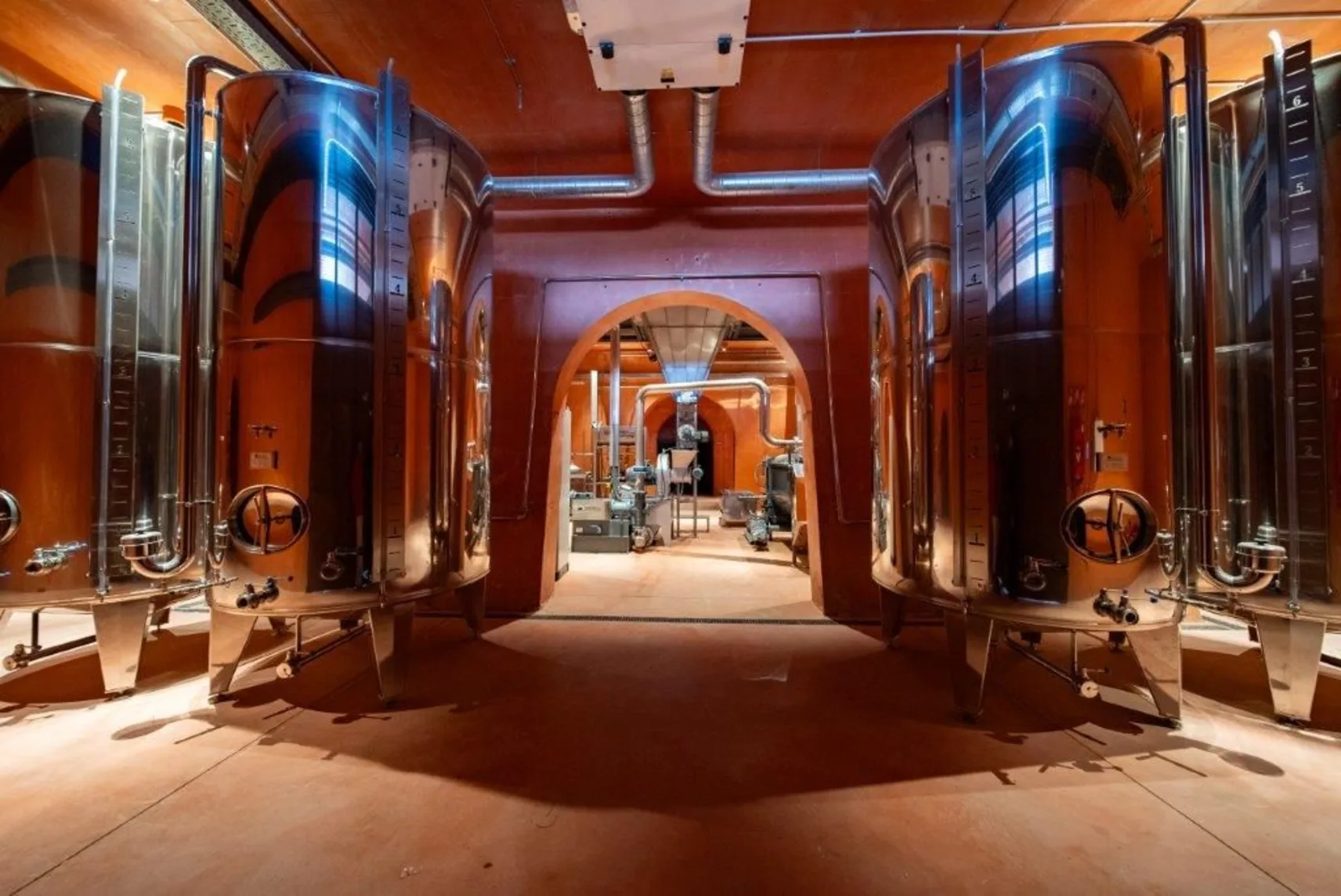
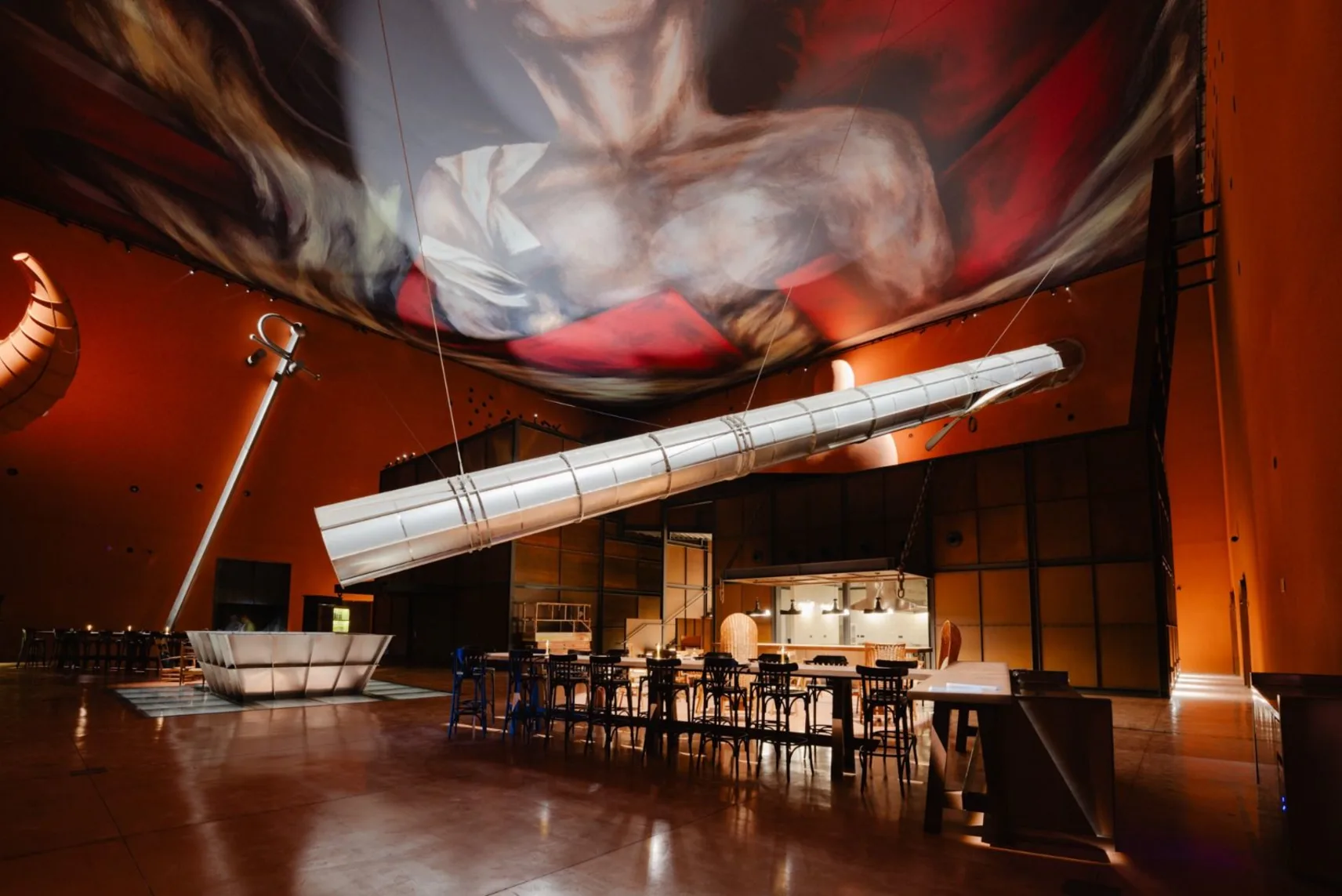
Upon crossing the threshold, the atmosphere changes entirely. Starck designed the interior with very dim lighting, deliberately seeking to bestow the space with the mystery and solemnity of a medieval castle. Rather than hiding the industrial machinery, the architecture transforms it into liveable art. A giant metallic pipe traverses the ceiling of the main hall, pouring the harvest of olives directly into the subsoil, allowing visitors to hear the echo of the fruits falling into the hopper before being pressed.
The interior spaces alternate rusted steel walls with details in timber and raw clay. They house an immense half-olive embedded in the wall, a bullfighting touch with a giant rapier (estoque), and a replica of the flying apparatus with which Abbas Ibn Firnas took to the skies in the 9th century.
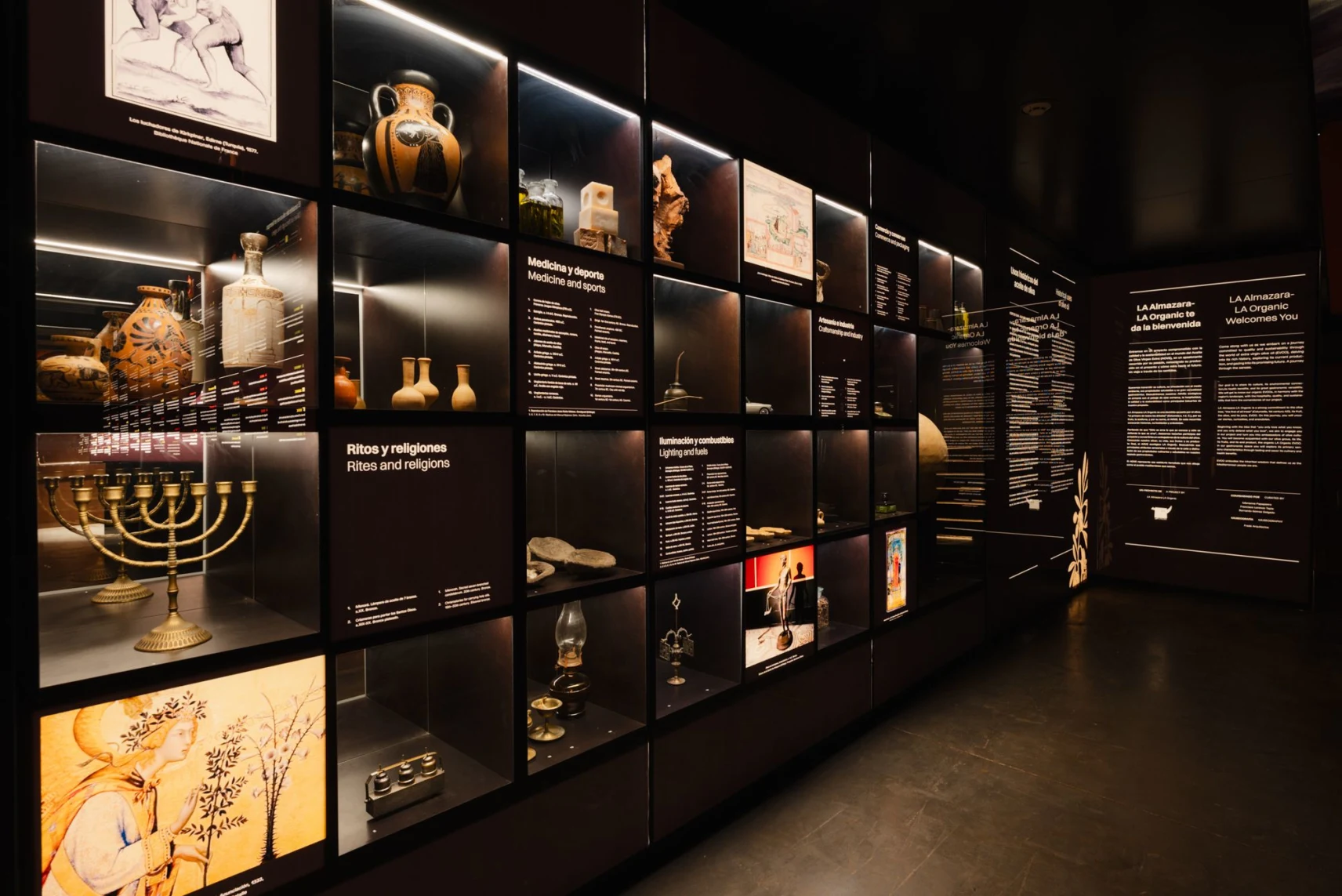
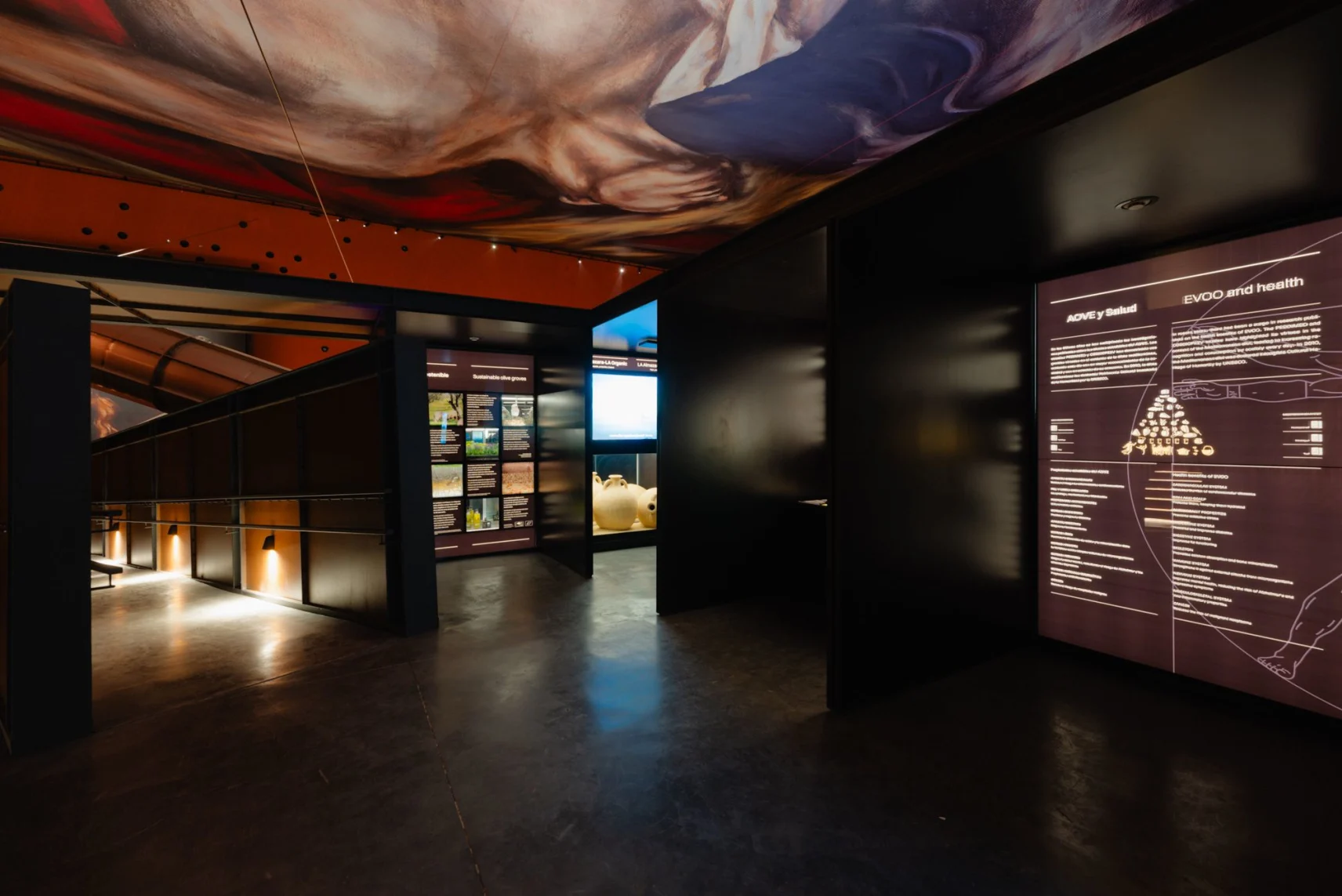
The experiencial tour of Almazara El Toro includes an olive oil museum charting the historical importance of the olive tree, an organic vegetable garden designed by Navarra’s Floren Domezáin, a greenhouse, and vineyards. The entire complex culminates on a spectacular cantilevered terrace, suspended in mid-air by three monumental oil tanker chains, offering an unobstructed, sweeping view of the breathtaking Sierra de Grazalema.
An exclusive experience with Travel Factory Andalucía
A complete understanding of this universe is achieved not merely by contemplating the design, but by uncovering its secrets and exploring the very place where the raw material is born. Through the private excursion Ronda Privada Plus with a visit to Almazara El Toro from Malaga, travellers will enjoy a bespoke itinerary to discover both the historic town of Ronda and this designer mill in a private experience with an exclusive tasting.
In addition to uncovering the secrets of Ronda, the day allows guests to delve into the industrial process, enjoy private professional tastings of El Toro & LA Organic EVOO paired with artisanal bread, and contemplate the traditional 19th-century Andalusian country house (cortijo) beautifully restored within the property by architect Stefano Robotti, a close collaborator of Starck.
It is an unmissable immersion where international art and Andalusian roots shake hands.